
As anti-immigration rhetoric intensifies across the UK and US, Rashi Bhogal argues that refugees are being scapegoated for crises created by war, inequality and political failure while governments abandon their moral responsibility to protect human life.
by Rashi Bhogal
Immigration has become one of the most polarising political issues in both the United Kingdom and the United States. Public discourse is increasingly dominated by fear that newcomers are taking jobs, draining resources, and threatening national identity.
This fear is not accidental. It is deliberately cultivated by politicians and right-wing commentators who benefit from division, win votes by pointing fingers, and turn human suffering into a political weapon.
Instead of asking how to keep people out, we should be asking why so many people are being forced to flee in the first place and what responsibility powerful nations have to address the conditions driving displacement. When did individual self-interest replace collective responsibility?
When did we stop caring about human life beyond our borders?
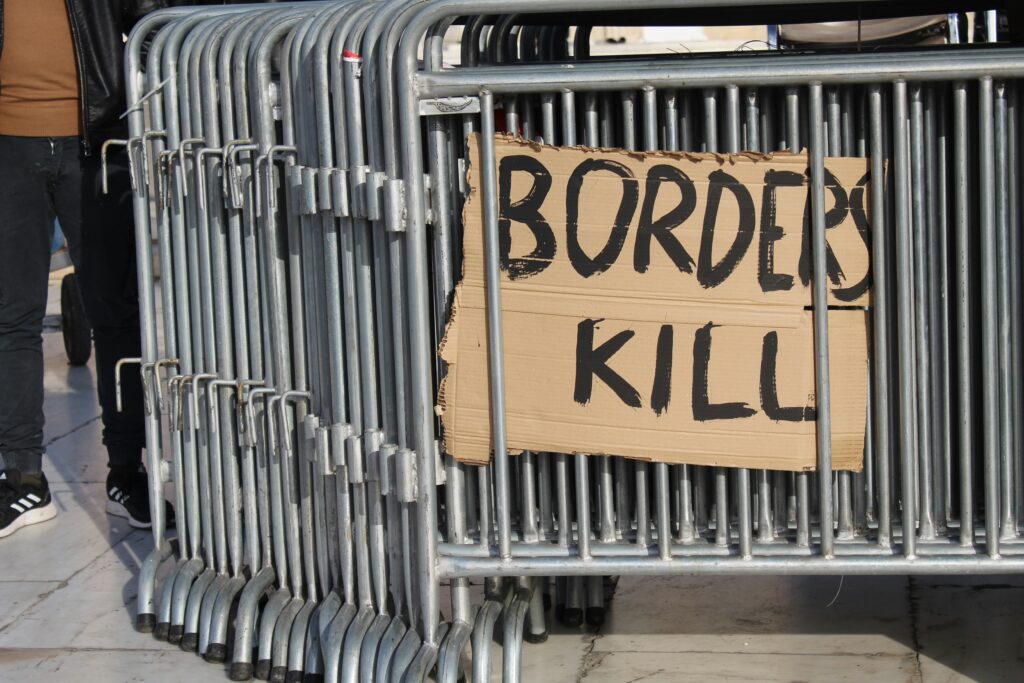
I stand with immigrants. I stand with people who are fleeing war, famine, political persecution, and climate catastrophe. Across the world, families are being driven from their homes by forces beyond their control. Children are being killed in hospitals and schools, and civilians are caught in conflicts they did not choose.
Human life should never be treated as disposable, conditional, or negotiable. Where someone is born should not determine whether they deserve to live, and trying to survive should never be treated as a crime. Yet we have built a world where borders matter more than people, political interests matter more than dignity, and power matters more than life.
My own life reflects the privilege embedded within global migration systems. These systems are not neutral or fair. They selectively grant mobility to some while criminalising others. I was born in India and became a United States citizen through my parents. I lived most of my life in Seattle, moved to the Czech Republic to teach English for a couple of years, and then moved to the UK for my master’s degree, where I now live.
I did not grow up wealthy. In fact, my parents struggled financially in ways that shaped every part of our lives. But I recognise privilege when I see it. I lived in a wealthy country and moved from one wealthy country to another. My mobility was never criminalised, and my right to cross borders was never questioned.
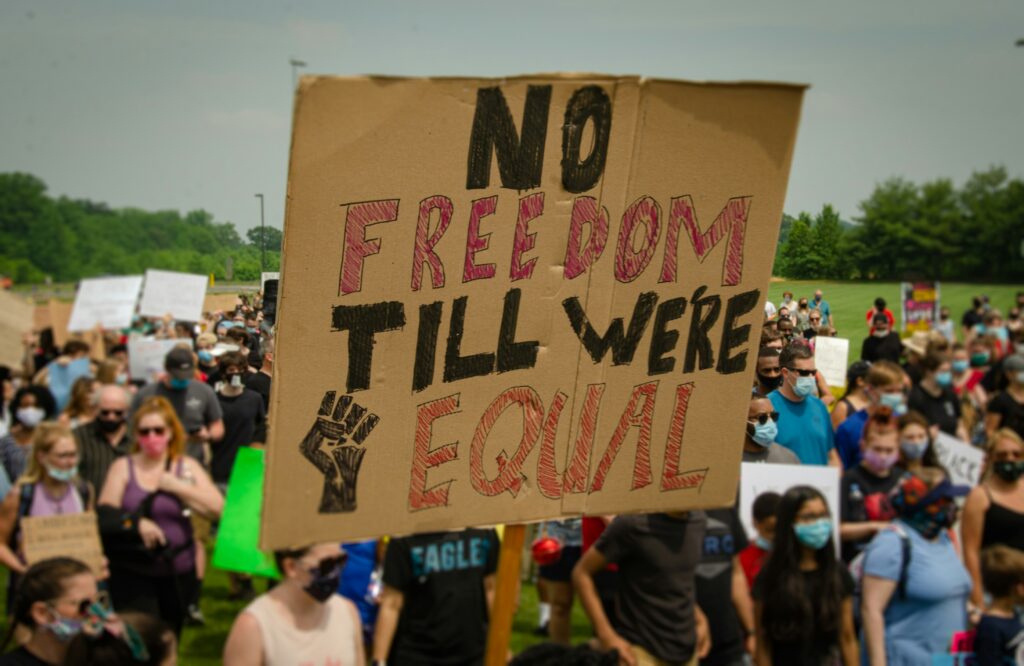
The Politics of Fear and Division
While living in the UK, I once had a conversation with a Conservative voter who did not believe she had any real privilege because her life did not resemble extreme wealth. Yet she had been given every opportunity by her parents, had never faced the prospect of displacement, and had never had to fear for her safety or future.
Her understanding of privilege was shaped by comfort and stability, not by survival. She could not understand why people arriving on small boats were being allowed into the country when, in her view, they contributed nothing to society and simply drained public resources. In contrast, migrants like me were framed as economically useful and therefore more legitimate. The distinction, for her, was obvious.
So why am I not perceived as a threat?
Because I also came here and got a job that a British citizen might otherwise have secured. The difference is not about jobs. It is about race, class, and the stories we tell ourselves about who is deserving of safety and dignity. Some migrants are framed as professionals and contributors. Others are reduced to burdens, criminals, or illegitimate arrivals. The distinction is political, often justified by economic language. It is a question of perceived value. This same logic governs how we decide whose lives matter and whose suffering can be ignored.
These realities extend far beyond immigration. We are witnessing a profound erosion of humanity on a global scale. Since October 2023, the UK and the US have supported Israel during the war in Gaza, where peer-reviewed studies and independent estimates suggest the death toll may exceed 70,000 people, including a very large number of children.
“Immigration, war, racial injustice, and poverty are not separate crises. They are interconnected consequences of a global system that prioritises power over people and profit over human life.”
The violence has continued to expand across the region, following Israeli and US strikes on Iran in 2026, escalating an already volatile Middle East conflict and resulting in further civilian casualties and humanitarian concerns. In Sudan, humanitarian organisations and UN investigators have warned that atrocities committed in Darfur bear the “hallmarks of genocide”, as tens of thousands of people have been killed and millions displaced during the ongoing conflict.
At the same time, the United States continues to carry out aggressive immigration enforcement operations in which citizens and migrants alike are detained, deported, and killed. People are targeted based on skin colour, legal status, and perceived belonging. Human beings are reduced to headlines, detention quotas, border statistics, and political talking points.
This is not acceptable. This is not ethical. This is indefensible.
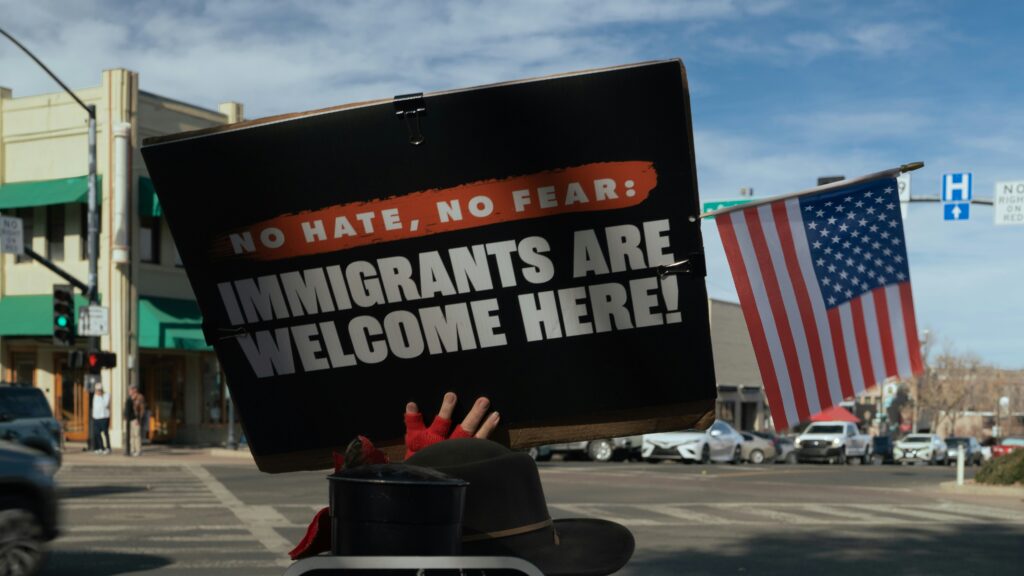
History Will Remember Our Silence
Immigration, war, racial injustice, and poverty are not separate crises. They are interconnected consequences of a global system that prioritises power over people and profit over human life. When we frame refugees as threats instead of victims of conflict, climate collapse, and political violence, we abandon our responsibility to one another.
We are witnessing a moral collapse, and it is visible everywhere. Children are being buried under rubble. Families are being torn apart at borders. Human beings are being hunted, detained, deported, and killed for the crime of trying to survive. This violence is not inevitable. It is the result of deliberate political choices made by those in power and tolerated by those who benefit from the system. Silence, indifference, and inaction are forms of complicity. History will judge how we responded to this moment, and right now, we are failing.
Rashi Bhogal is a research-driven professional with experience in trusts fundraising and prospect research within the charity sector. She holds a BA in Literature from Seattle University and an MA in Corruption and Governance from the University of Sussex. She has a strong interest in immigration, human rights, and policy implementation, with a focus on how institutional decision-making shapes outcomes for marginalised communities.