Displaced FGM survivor crowdfunds for legal fees and protection while Sierra Leone government fails to act on ECOWAS judgement in her name a year later
by Vicky Gayle
A woman whose sexual assault led to Sierra Leone being ordered to ban female genital mutilation (FGM) has launched a crowdfunding campaign to fund her fight for justice.
It’s been one year since the Sierra Leone government was found to be “complicit” in Kadijatu Balaima Allieu being forcibly cut for failing to criminalise FGM, despite its legal obligations.
The Economic Community of West African States (ECOWAS) Court of Justice ruled that Kadijatu’s experience met the legal threshold for torture.
It added that she should be compensated $30,000 (approx. £22,000) for her “pain and suffering”, “long-term health complications” and the “unacceptable lack of action…to investigate and prosecute the perpetrators”.
Kadijatu, 38, is aiming to raise €8,000 (approx. £6,800) to help FGM and other harmful practices against women and girls be eradicated in Sierra Leone.
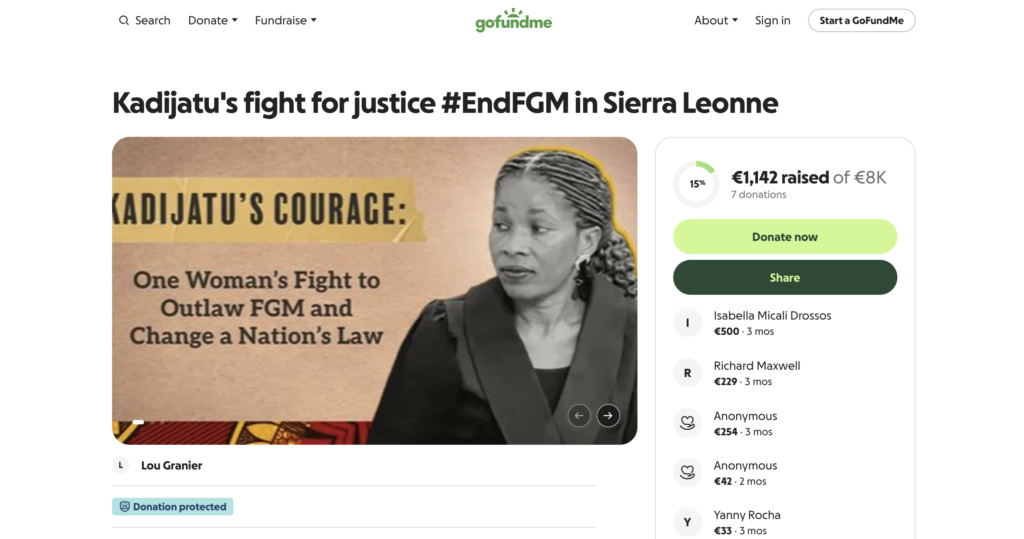
She said: “I appreciate the money coming in for the GoFundMe, but it’s not only about the money, it’s about the story behind the money. This is one way for my message to go across the globe and for people to know that FGM is not just a ‘story’, it’s a day-to-day occurence, so we need to come together to end the practice.”
In September 2016, Kadijatu had her genitals cut during a horrific days-long assault by women in the influential Bondo Society when she was 28 years old.
After convincing one of the women keeping watch to retrieve Kadijatu’s mobile phone, she was able to text for help. Eventually, she was rescued by police and activists who took her to hospital, where she faced further threats from the Bondo Society.
Fearing for her life, Kadijatu fled, leaving behind her then 10-year-old son. In 10 years, she has lived in four countries besides Sierra Leone due to her safety, and is unable to find regular employment.
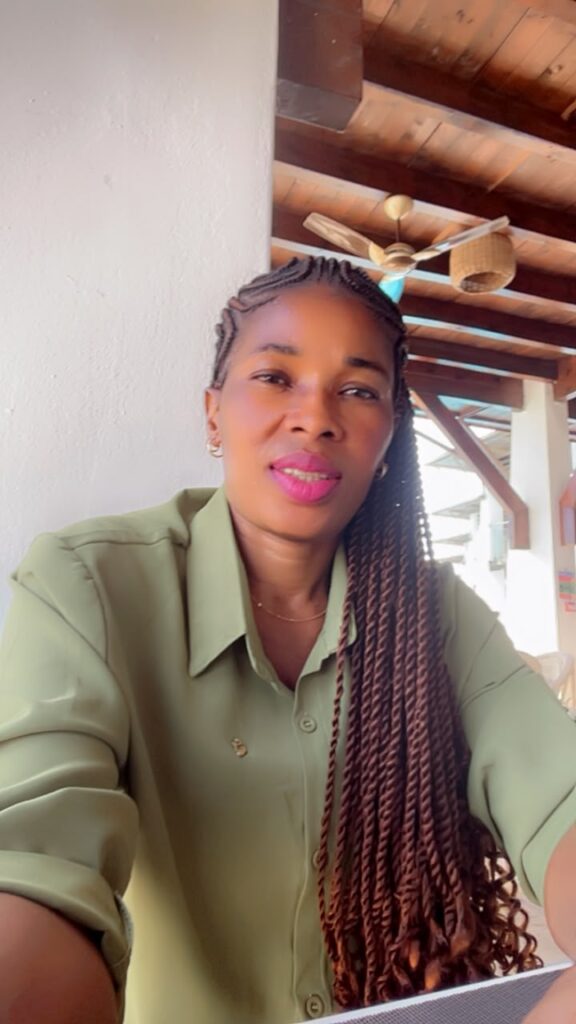
“Finding myself in this space, I cannot even wrap my head around it,” she said. “There are no words that can describe the sacrifices I have made.”
The GoFundMe campaign was created by staff at the World Bank who read Kadijatu’s story years ago and were moved by her Ecowas win.
Donations will “cover the legal costs needed to pursue further action and appeals, ensure her protection, and provide for her basic needs while she remains displaced,” the campaign page reads.
In May 2023, a private prosecution was initiated in magistrates court against the woman alleged to have cut Kadijatu, which is yet to be committed to the High Court for trial.
The fact that Kadijatu, as the victim, had to pursue this herself was cited as another failure of the Sierra Leone government in the court ruling. It ordered the government to “identify and prosecute the perpetrators”.
Meanwhile, FGM is still legal in Sierra Leone.
The ECOWAS Court of Justice allows individuals to file complaints against Member States for human rights violations.
Ishmael Cole, national coordinator at the Forum Against Harmful Practices (FAHP), one of the organisations to file the court case alongside We Are Purposeful and Kadijatu, had told Migrant Women Press the ruling has a “significant implication”.
He added: “It sets a monumental precedent for the protection of women and girls across the region.”
The court’s judgements are legally binding and countries can face sanctions for non-compliance.
However, Member States “bear the primary obligation” to enforce the judgments against them, an Ecowas spokesperson informed Migrant Women Press this year.
Regarding Kadijatu’s case, “the Court has fulfilled its judicial mandate by delivering a reasoned decision”, leaving the Ecowas Commission to monitor that Sierra Leone implements the judgement.
“Our government is failing to protect our women, our children, our babies, and even our bodies are not safe,” Kadijatu said, who spoke of her frustration with lawmakers.
Sierra Leone has one of the highest FGM prevalence rates globally.
To help fill the gap left by the government’s negligence, Kadijatu helps rescue women in a crisis who are at-risk of being cut.
She recalls a harrowing incident involving a 30-year-old mother-of-four who has accused Bondo Society members in Freetown of performing FGM without her consent. It’s reported that Bintu Kamara, (not her real name), was “dragged into a room, stripped naked, restrained” and later stopped from seeing her children.
Kadijatu, who describes herself as a “motherless child”, questioned: “Who is going to take care of the mother? Who is going to take care of these children? She’s traumatised.”
As an activist, Kadijatu must regularly relive her trauma to raise awareness of gender-based violence. It’s a price she’s willing to pay so as not to “fail the thousands of women yet to come forward”.
After being refused a visa to speak at the Women Deliver 2026 conference in Melbourne, Australia, in April, Kadijatu is even more determined to give other survivors an international platform.
“If I have more money, I will go and spread my message. And the message is not just about me,” she began.
“I want to help change the narrative for survivors, so they know you can turn your pain into campaigns and activism, and make your voice heard.”
The UN’s deadline for FGM to be eradicated worldwide is 2030. But before that, September marks the painful anniversary of Kadijatu’s life having changed forever.
Becoming emotional, she said on that date: “I want to gift myself a flower because it’s something I have never received from anybody. So I decided, let me be a flower to myself, to make myself feel special and like I belong.”
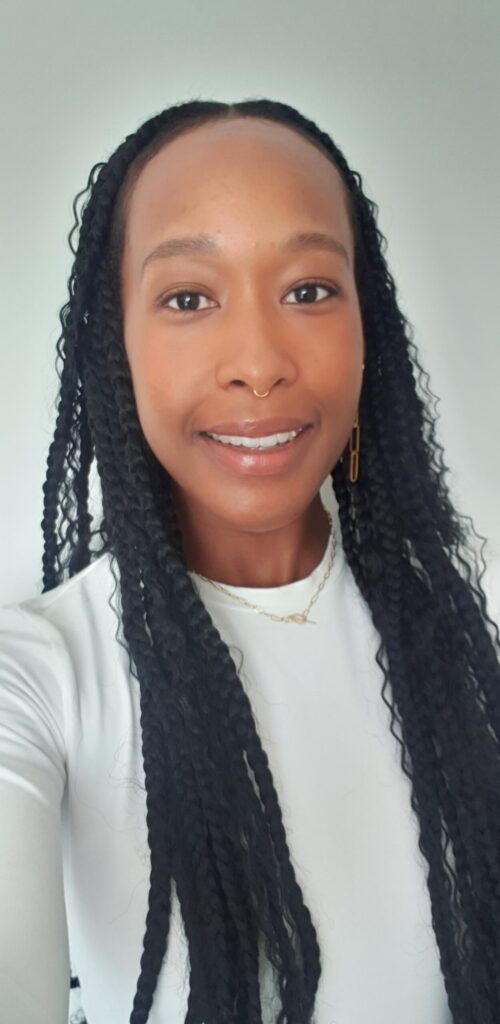
Vicky Gayle is a freelance investigative journalist and editor, who has reported on health inequalities, disability, housing, migration and precarious work. Her career began in regional news and she co-led Newsquest’s first data investigations unit before working at the Bureau of Investigative Journalism (TBIJ). Her time is now split between journalism, including a cross-border environmental investigation, and freelancing at BBC StoryWorks. When she’s not reporting compelling stories, she’s finding new projects to work on, teaching and mentoring. Find her stories at Migrant Women Press, The Voice Online, Black Ballad, The Observer, Refinery 29, The Daily Mirror, Channel 4 News and more.