Immigration rules may appear gender-neutral on paper, but in practice they continue to deepen inequality and push migrant women into precarity, separation and destitution.
by Francesca Sella
In 2019, Professor Catherine Briddick argued that UK immigration rules and policies indirectly discriminate against migrant women. Seven years on and many Home Secretaries later, I suggest that this very much remains the case in 2026. During the last year alone, the UK Government has introduced a number of proposals which, if brought into force, will have a disproportionate impact on migrant women.
The UN Committee on the Elimination of All Forms of Discrimination against Women defines indirect discrimination as:
“When a law, policy, programme or practice appears to be neutral insofar as it relates to men and women, but has a discriminatory effect in practice on women because pre-existing inequalities are not addressed by the apparently neutral measure”.
In other words, indirect discrimination occurs when a policy seems like it impact everyone equally but its effect disproportionately harms a particular group, in this case, women.
Migration law is, on the face of it, neutral. Immigration rules and policies do not directly discriminate against women (although that was not always the case, see, for example, British nationality law). Yet, where migration policy fails to account for existing inequalities, it creates a disproportionate disadvantage for women.
Over the last year, the UK Government has proposed and introduced some draconian changes to the immigration system – and there is certainly no shortage of examples of measures that, whilst neutral on the surface, will disproportionately affect women.

The suspension of refugee family reunion
Prior to September 2025, refugees in the UK were able to apply for their family members to join them through the refugee family reunion provisions in the Immigration Rules. Whilst the definition of “family” under these rules was narrow (limited to spouses, partners and children under 18 or, on an exceptional basis, over 18), this route provided a lifeline for families of refugees. With essentially no other safe and legal routes available for refugees to travel to the UK, family reunion represented the only way for separated refugee families to reunite.
Crucially, family reunion visas were mostly granted to women and children. Between June 2024 and June 2025, 37% of family reunion visas were issued to women, compared to 7% issued to men. This means that women were granted family reunion visas over five times more often than men.
When the UK Government suspended the family reunion route in September 2025, it did so on ostensibly neutral grounds, citing significant pressure on local authorities to house newly granted refugees and their families. The suspension was announced with no prior warning and only three days’ notice.
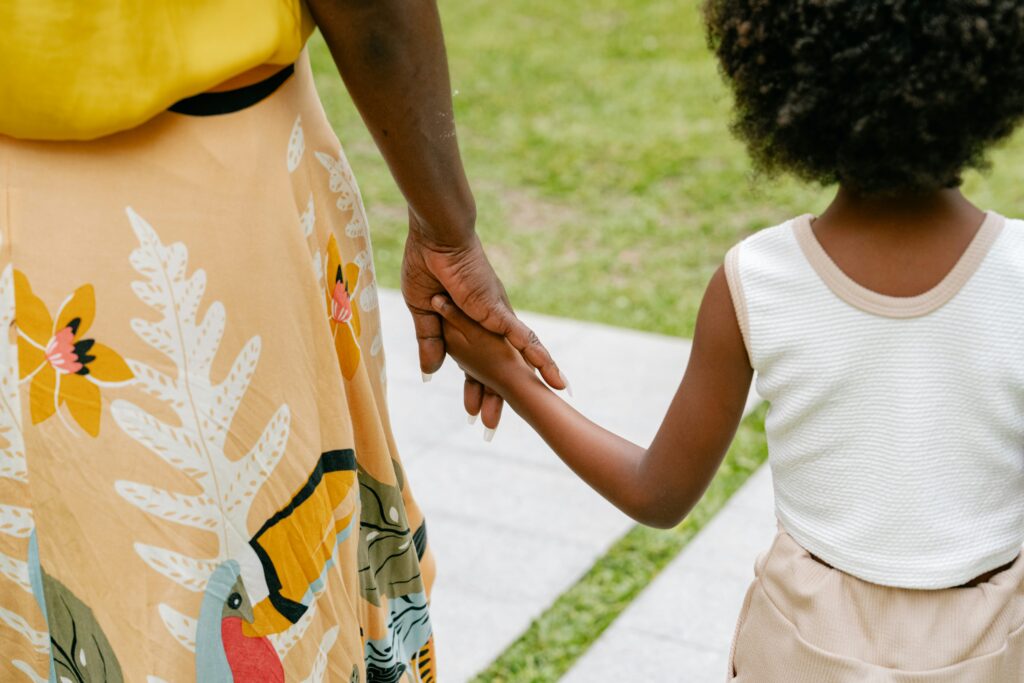
Although families can now apply to join their relatives through other immigration routes, stricter requirements, prohibitive application fees, and added bureaucratic complexity make this incredibly difficult. Additionally, challenges in accessing legal aid exacerbate these difficulties, forcing families to remain separated.
The impact of this policy decision is anything but neutral. By closing off one of the only viable routes to safety, the policy disproportionately affects women – many of whom are left separated from their families, often in dangerous and life-threatening situations.
Whilst the suspension is currently being challenged in the courts, women will continue to be the most affected by this decision.
“Earned” settlement
In November 2025, the UK Government announced what has been rightly described as the biggest overhaul of the legal migration model in 50 years – the “earned” settlement consultation.
It is already complex and very expensive for a migrant to qualify for and obtain settlement in the UK. The new proposals seek to make this much more difficult, extending the minimum period for most migrants to settle in the UK from five to ten years. Beyond this, a clear theme that emerges is that settlement is no longer a right, and it becomes a prize to be earned through primarily economic contribution.
Individuals will need to have earned a minimum income continuously for up to five years to qualify. High earners are rewarded with reductions to the ten-year baseline. Conversely, those classed as low and medium-skilled workers face penalties of up to five years added onto the ten-year baseline, and those in receipt of public funds could face a penalty of up to ten years added on – meaning settlement could take as long as 20 years. If you are wealthy, you get settlement quicker. If you are not, you are punished and get settlement slower.

It has already been argued that these proposals risk disproportionately affecting migrant women and their families. Men continue to earn about 7% more than women in most jobs in the UK. This gap is even wider for Black, Asian, and Minority Ethnic (BAME) women who, whilst experiencing the compound effect of the gender and ethnicity pay gap, earn on average 25% less than white British men.
Part of this gender pay gap is driven by the impact of caring responsibilities on women’s careers. Women are much more likely to be out of work or in part-time work due to caring responsibilities, compared to men. Again, this is more common among BAME women.
Many migrant women will clearly struggle to meet these financial requirements and will often require access to public funds to support themselves and their families. Under the current proposals, women in these circumstances will be significantly penalised – facing up to 20 years of precarity – not because of anything they have done but as a result of a hostile migration policy that ignores existing gender inequalities.
Restricting access to support: the Family Returns consultation
In March 2026, the UK Government opened a public consultation on removing asylum- seeking families from the UK. The measures aim to limit access to asylum support and local authority support for asylum-seeking families who have become appeal rights exhausted (“ARE”), to eventually force them to leave the UK. The proposals are cruel and, if implemented, will force ARE families into street homelessness and destitution.
Again, on the face of it, these proposals are neutral, as they apply equally to men and women in the asylum system.
Yet, the data tells us a different story.

In 2024-2025, 74% of migrant families supported by local authorities were female-led single-parent households, compared to just over 5% that were male-led single-parent households. In other words, single migrant mothers are disproportionately more reliant on local authority support. This is consistent with other evidence showing that no recourse to public funds disproportionately affects migrant women in the UK.
Restricting access to support will disproportionately affect migrant women and their children, who are likely to face destitution, homelessness and harm as a result.
A pattern, not an exception
Taken together, these policies reveal a consistent pattern: migration policy is a gendered issue. Policies that appear neutral systematically disadvantage migrant women as they simply ignore pre-existing inequalities.
Evidence shows us that migrant women are more likely to enter the UK on a dependant visa than men, they are more likely to be in lower paid employment and are more likely to require access to welfare benefits and local authority support. Policies that ignore these realities only deepen inequality.
A migration system that claims neutrality whilst ignoring inequality is not neutral at all; it is discriminatory, and migrant women are left to pay the price.
Francesca Sella is an Associate Solicitor at the Scottish Refugee & Migrant Centre at Just Right Scotland, specialising in asylum and human rights law. After graduating in 2018, she worked at the Council of Europe in Strasbourg as an intern with the Office of the Special Representative on Migration and Refugees. She completed her traineeship at an immigration and asylum firm in Glasgow and qualified as a solicitor in 2021. She joined JustRight Scotland in October 2021. Her work focuses particularly on asylum cases involving gender-based violence and FGM, as well as refugee family reunion cases both within and outside the Immigration Rules.
This article was produced in collaboration with JustRight Scotland. Learn more about their work here.