
Sustainability consultant and Global South Voices founder Gayatri Kale is calling for a new approach to climate action that values Indigenous knowledge, lived experience and community-led solutions.
This article is a collaboration with Local Storytelling Exchange.
For Gayatri Kale, the ever-increasing headlines of how the climate crisis is hitting everyday life don’t come as a surprise.
Instead, she just wishes that people would think about how to tackle the issue with a little more empathy.
Since coming to Scotland in 2023 as an international project management student Kale has moved quickly to work on the front line of the climate challenge.
Now working as a sustainability consultant, she has worked with business and charities alike and is a climate advisory group member for Museums Galleries Scotland. She recently founded Global South Voices Project, a community‑led platform amplifying Indigenous knowledge, people, place, and practice.
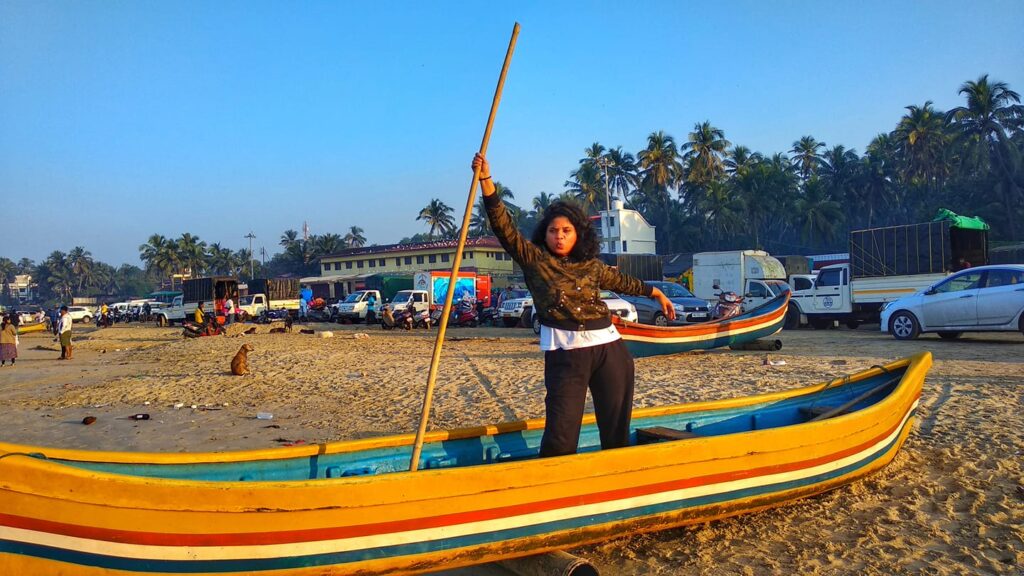
Her driving force is to connect policymakers with the collective knowledge all of us have about our planet; because, she believes, there may be answers that we in the global north may have overlooked.
‘When it comes to tackling the climate crisis there’s a disconnect between what happens in the public sector, and what happens at the grassroots,’ she says. ‘Through my work I’m sitting in those two different rooms – and I can see the disconnect very clearly.
‘We’re designing climate technologies without speaking to the people who will use them. Many households already find existing energy tools difficult, so the gap between innovation and everyday reality keeps widening.’
‘In the end, these are the people who consume the energy. Are they really considered?’
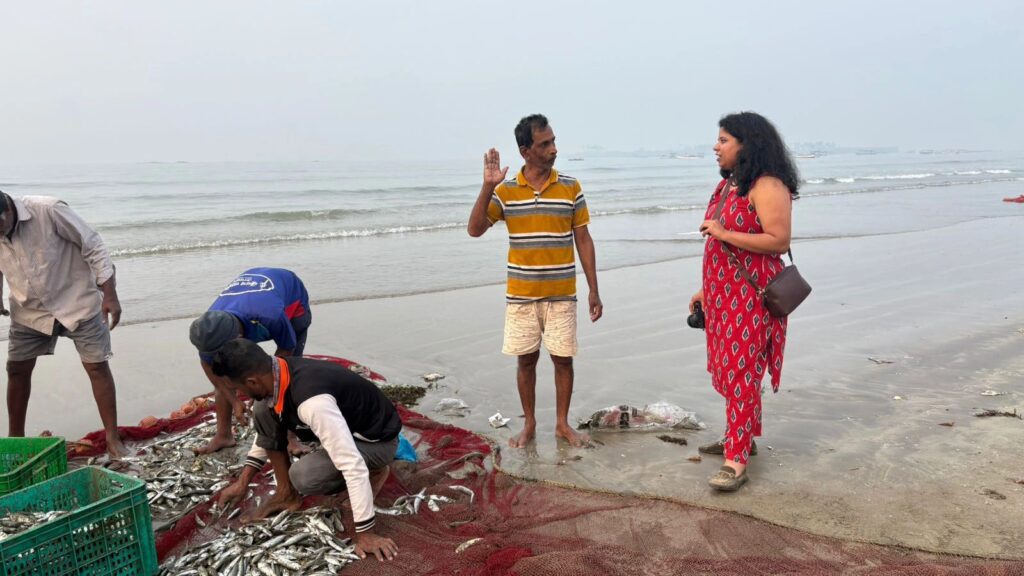
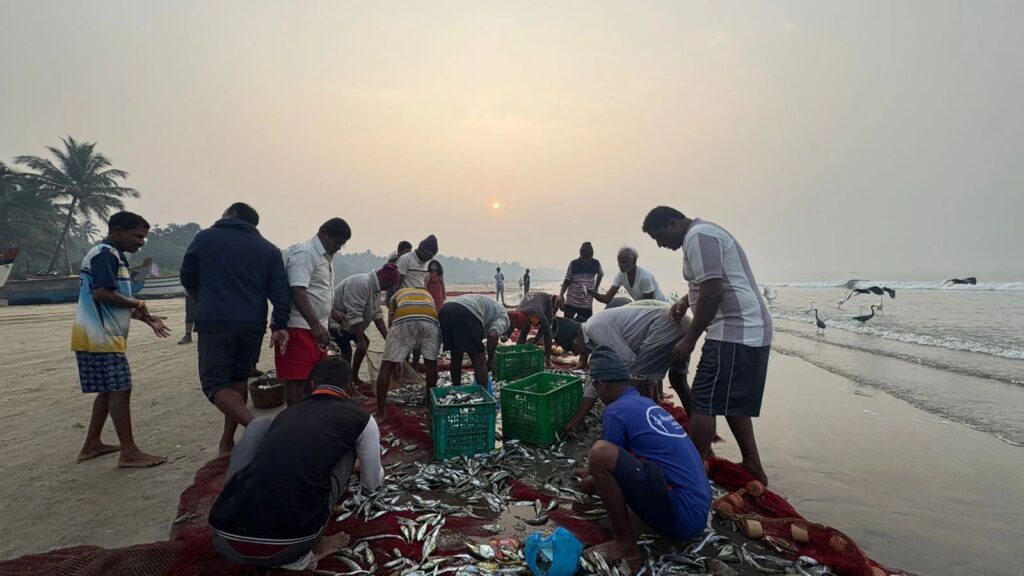
Kale spent her childhood in a fishing village called Malvan, in Maharashtra in Western India. Fishing was the way people made a living – until it wasn’t, she says.
‘In our coastal village we only used to see a handful of local fish species in the catch. Over the years we’d been talking about these different fish by their names in the local language of Malvani; we don’t even know what to call them in English or Hindi. But you don’t see these fish now.
‘Those local names are the only way these species have been documented, before disappearing from our waters due to deep‑sea trawling and warming seas. The way I see it, that’s a knowledge system that can be studied – and can help with revival projects for major species, too.’
It’s this indigenous knowledge that is closely focused on what generations before us needed from it to survive that Kale wants to bring back.
‘There are so many indigenous practices, tribal or community practices that are really not talked about – and not seen as useful climate intelligence,’ she explains. ‘There’s lots of investment out there going towards technology that’s not yet proven to be feasible – but they don’t want to invest in nature conservation, or in making sure indigenous knowledge is well-kept.
‘For me, it does seem that we are still ruled by colonial mindset and systems – this reflects a structural bias in how knowledge is valued.
‘Scientific data is prioritised, while Indigenous ecological knowledge often preserved through language, songs, and oral traditions, is not taken seriously. That limits our ability to learn from communities who have observed environmental change for generations.
‘Across coastal and tribal communities, people have read the moon, the waves and the tide for generations. This is climate wisdom, built through lived experience, not extracted through research.
‘If we want to understand how our environments are changing, we need to value this knowledge on its own terms, and work with communities in ways that are respectful, reciprocal and non‑extractive.’
Kale’s perspective applies just as much here in Scotland, as it does in her home country of India. She has travelled to Denmark, Mexico and across the Scottish Highlands and Islands which, she says, has reminded her that there is deep-seated ancestral knowledge wherever you go.
Generations-old place names, for example, detail the landscape in a way that helped its inhabitants remember the location of a spring, or the place where their livestock could feed on fresh grass. Work being done by organisations such as the Findhorn, Nairn and Lossie Rivers Trust, for example, re-approached this knowledge as a way of mapping the changing profile of a river catchment that they hope to revive.
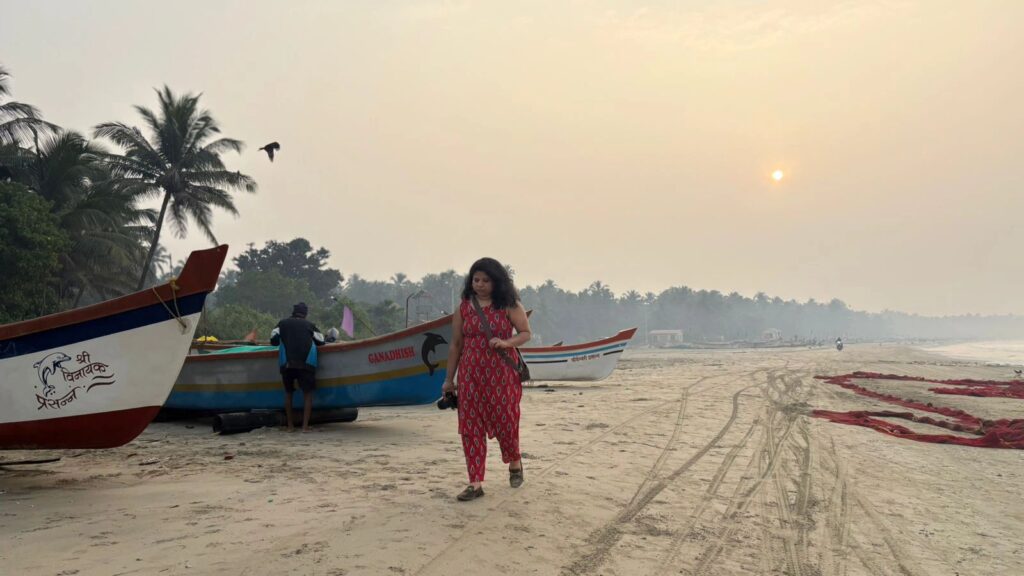
Most of all, says Kale, what we can learn from those who came before us is a sense of hope and care; two very strong emotions that she thinks are being lost.
‘There is this idea that indigenous communities always have been very respectful of what they extract from; be it the forest or the loch, there is always a gratitude that is paid. You pay that respect and you make sure that you preserve and you give more than what you take.
‘That mutual respect is essential. You don’t have to care about the whole world – just start with your neighbourhood. And what you put in as an adult, your kid will see it and they’ll follow the practice; they’ll maintain it.’
Global South Voices runs regular ‘Walk and Talk’ events for in Glasgow. For more details, see their Instagram page or head to Facebook.
Learn more about Local Storytelling Exchange. See their website and Instagram page.

