Migrant women in Scotland often learn how to use healthcare services by talking to other women. This article looks at how these conversations help them deal with language barriers and feel safer using the system.
by Kadija Bouyzourn
In Edinburgh, many migrant women learn how to navigate the Scottish healthcare system through conversation rather than paperwork. Information moves orally: through gossip exchanged at school gates, stories shared in kitchens, and voice notes passed between phones. These exchanges are often dismissed as informal but for women facing multiple, overlapping barriers, they are how healthcare becomes accessible and how safety is negotiated.
Across interviews with five migrant women living in Edinburgh – from Algerian, Syrian, Palestinian and Iraqi backgrounds – informal oral communication repeatedly emerges as the main way people understand NHS Scotland. Most had arrived through family reunion or asylum routes and were navigating healthcare in a second or third language. Several women describe growing up in contexts where practical knowledge, including health-related information, is commonly shared through family conversations, neighbours, and community networks rather than formal written systems.
“It was other [women] who explained it to me, like how you go to a GP, asking for an interpreter […] that you don’t have to accept being rushed. No one [at the surgery] ever told me that.”
Women described learning how to register with a GP, how appointments work, what different letters mean, how long referrals actually take, and which medical professionals feel safe to see. This knowledge rarely came from official sources, it came from other women.
“I didn’t understand how the NHS worked at all at the beginning. I thought you just go to the doctor and that’s it,” says Amina, a Syrian woman in her forties who arrived in Scotland through a family reunion route. “It was other [women] who explained it to me, like how you go to a GP, asking for an interpreter […] that you don’t have to accept being rushed. No one [at the surgery] ever told me that.”
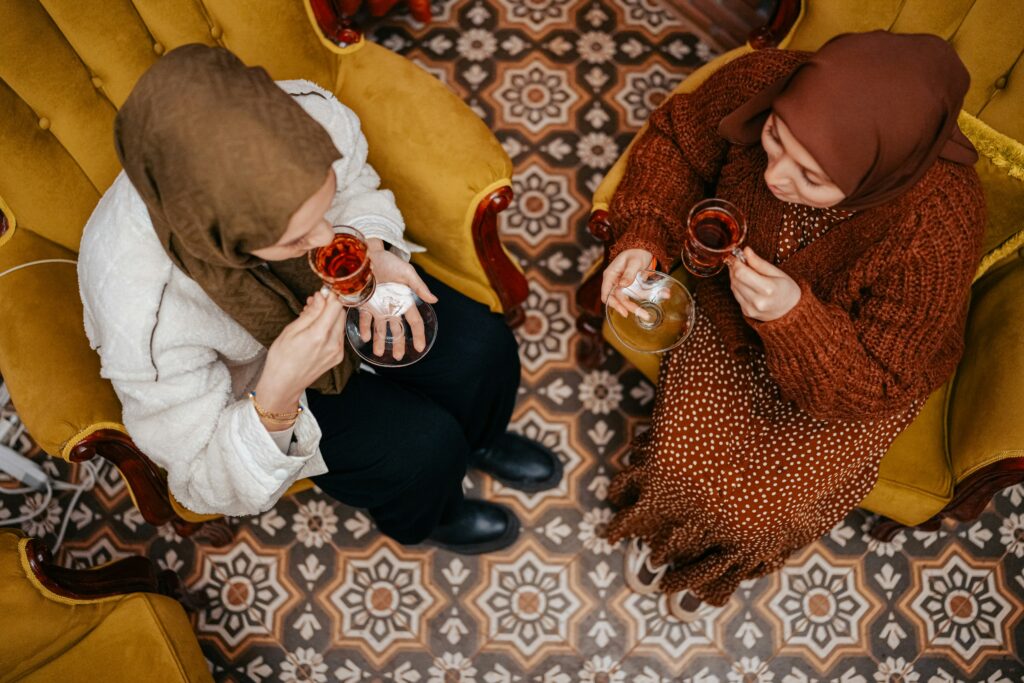
Women chatting over tea. Photo by Ahmet Kurt on Unsplash.
Intersectional language barriers
These informal, woman-to-woman conversations about healthcare are especially important for women experiencing intersectional language barriers: situations where limited English overlaps with other forms of exclusion, such as low literacy, digital barriers, insecure immigration status, gendered power dynamics, racism, or previous experiences of discrimination. For these women, access is not just about whether information exists, but whether it is understandable, usable, and safe to act on. Safety is assessed collectively: women test advice through shared experiences, compare outcomes across multiple stories, and rely on trusted relationships to judge whether acting on information could expose them to risk, dismissal, or harm.
“I could speak some English,” said Amina. “But I was not confident to push [back] on things.”
Some interviewees described receiving NHS letters they could not read or fully understand. Others explained that even when they spoke some English, medical language felt overwhelming, especially during short appointments. Several women said they were unaware of their rights within the system, including the right to request an interpreter, to change GPs, or to ask for a second opinion, until another woman explained these things to them.
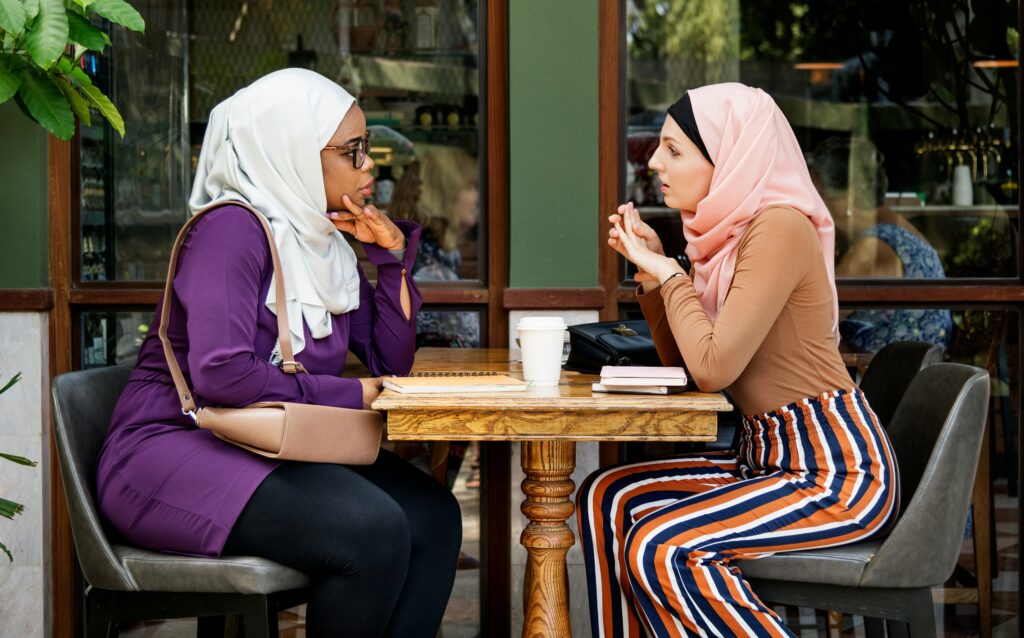
Women sharing conversation in a public café. Photo on Unsplash.
Rights on paper, gaps in practice
Under NHS Scotland policy, patients are entitled to free interpreting services during medical appointments, including face-to-face, phone, or video interpreting. These services should be arranged by the NHS, and patients should not be expected to rely on family members or children. These rights are grounded in the Patient Rights (Scotland) Act 2011 and are explained in public guidance from NHS Inform, the national health information service. Patients are also entitled to respectful, non-discriminatory care and have the right to change GPs or request a different clinician if they feel uncomfortable or unsafe.
“[My mother-in-law] has no literacy [in any language], no phone skills, no one to ask except family,” said Nour, a Syrian woman in her thirties who arrived in Scotland almost five years ago. “So when something comes from the NHS, it just stops with her.”
In this context, oral communication offered a different kind of access: a space where information was shared collectively.
In practice, many women said this information never reached them in a usable form. For some, the barrier was literacy. For others, it was confidence. Asking for an interpreter or questioning a decision felt intimidating. Several women worried about being judged for their English or accent, or their migration status. In these contexts, oral communication created a different space, one where uncertainty was expected and questions were allowed.
In everyday situations, crucial information often fails to reach women in a usable form. Barriers were rarely linguistic alone: limited literacy in any language, low confidence, time-pressure appointments, and fear of judgement can all shape whether women can access care. In this context, oral communication offered a different kind of access: a space where information was shared collectively.

A woman smiles while she listens to a voice note. Photo by Fellipe Ditadi on Unsplash.
Voice notes, storytelling, and shared experiences
Voice notes play a central role for this mutual support. Women described sending long audio messages after appointments, explaining what was said, what they understood, and what they were confused about. These messages are replayed, forwarded, and discussed. Unlike written messages, they allow for repetition, tone, and emotion, and are accessible to people who struggle with reading.
“When someone is ill, we visit them. That’s our custom,” said Samira, a Palestinian woman in her fifties living in Edinburgh. “We talk about what the doctor said, what they said, what helped, what didn’t. We share advice like that. When we can’t [visit] we always send voice notes and talk [about health] and share things. We live the same things, so we help each other.”
“Before I do anything, I ask around first. That’s how we do it”.
Storytelling serves a similar function. Rather than abstract advice, women share experiences: how a GP responded, whether they felt listened to, how long things took, and what they wish they had known beforehand. These stories help others prepare, emotionally as well as practically, for what lies ahead.
“Before I do anything, I ask around first. That’s how we do it,” said Safae, an Algerian woman in her forties. “That’s how we know what’s safe.”
These exchanges are not neutral or infallible. Information shared orally reflects individual experiences and perspectives, and it can be shaped by fear, trust, or past harm. Women are aware of this. They compare stories, look for patterns, and weigh advice based on who is speaking and what has happened to others. Reliability is not assumed; it is negotiated collectively.
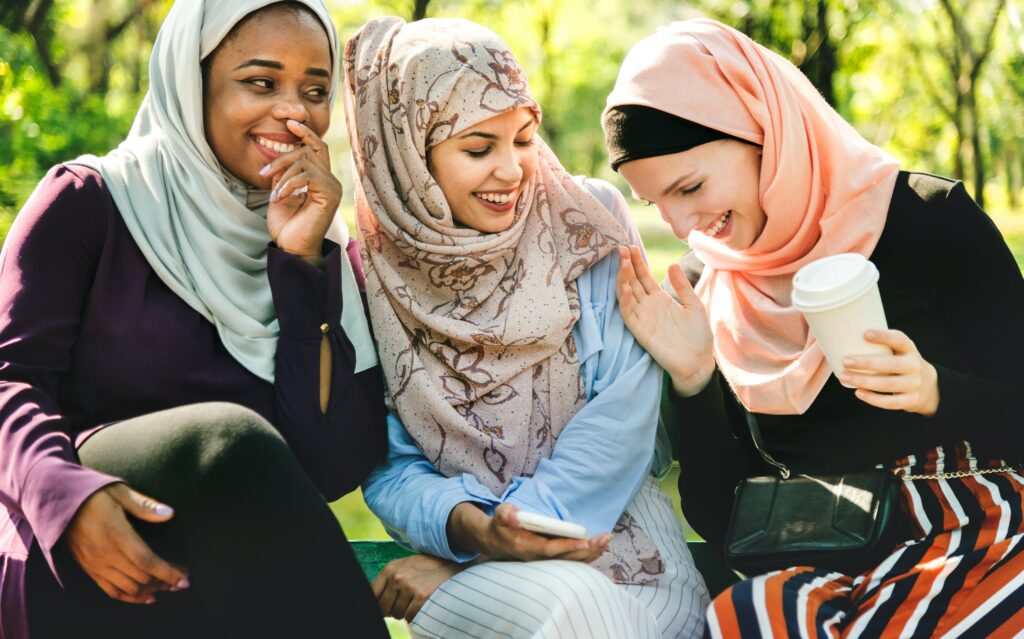
A group of women chatting and laughing.Photo on Unsplash.
Community networks beyond migrant women
These oral traditions are everyday ways women talk to each other about health, in home visits, phone calls or voice notes, outside formal medical settings. They do more than circulate information. They empower women in concrete ways. They help them prepare for appointments, insist on interpreters, ask informed questions, and choose practitioners they trust. They shift women from passive recipients of care to active decision-makers within the system.
“[Talking to other women] gives me information so I knew what to even ask,” said Nour.
From an institutional perspective, these conversations are largely invisible. They happen outside clinics and consultation rooms, on phones and in homes. They leave no formal record. Yet they shape how people use healthcare services: when they seek help, where they go, and whether they persist when they encounter barriers.
The reliance on oral traditions does not reflect a rejection of NHS Scotland. Many women expressed strong belief in the principle of universal healthcare. What they described instead were gaps between policy and lived experience; gaps widened by language, power, and discrimination.

While most exchanges described here took place between migrant women, information also circulated through wider community networks. This included neighbours, older children, community volunteers, faith-based groups, or friends with longer experience of the healthcare system. Women often acted as interpreters and brokers of institutional knowledge within families and communities, passing information on orally to others who needed it.
Oral communication bridges those gaps. It allows information to be explained slowly and in context. It creates space for emotion, repetition, and doubt. For women facing intersectional language barriers, these qualities are essential.
For many migrant women in Scotland, access to healthcare is not just about services being available. It is about feeling informed, respected, and safe enough to use them. Gossip, storytelling, and voice notes are how rights become real for some women.
Sometimes, gossip saves lives.
Names have been changed and identifying details withheld to protect the privacy of the women interviewed.
This article was produced as part of the Migrant Women Press Fellowship Programme 2025.
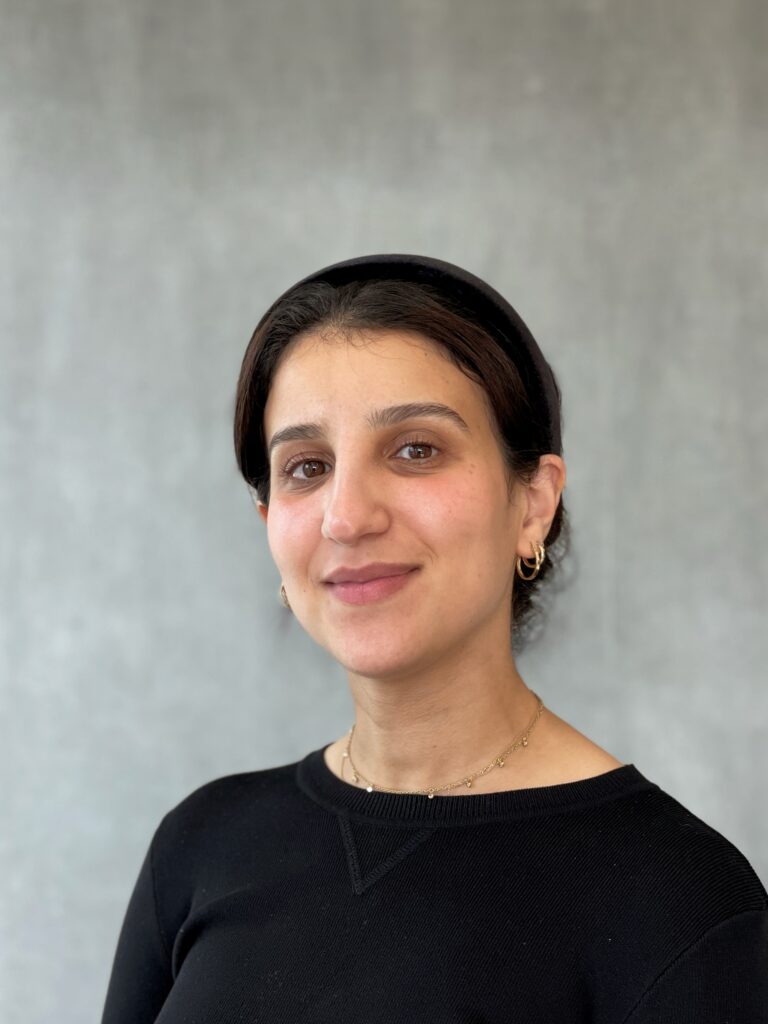
Kadija Bouyzourn is a linguist and researcher working on language access, migration, and healthcare. Her work focuses on how migrant communities navigate healthcare and institutions when language barriers intersect with other forms of inequality.