From street harassment to workplace abuse, Asian women describe how encounters with teenagers are reshaping their sense of safety and belonging, while support groups warn that underreporting masks the true scale of the problem.
by Vaishnavi Gottumukkala
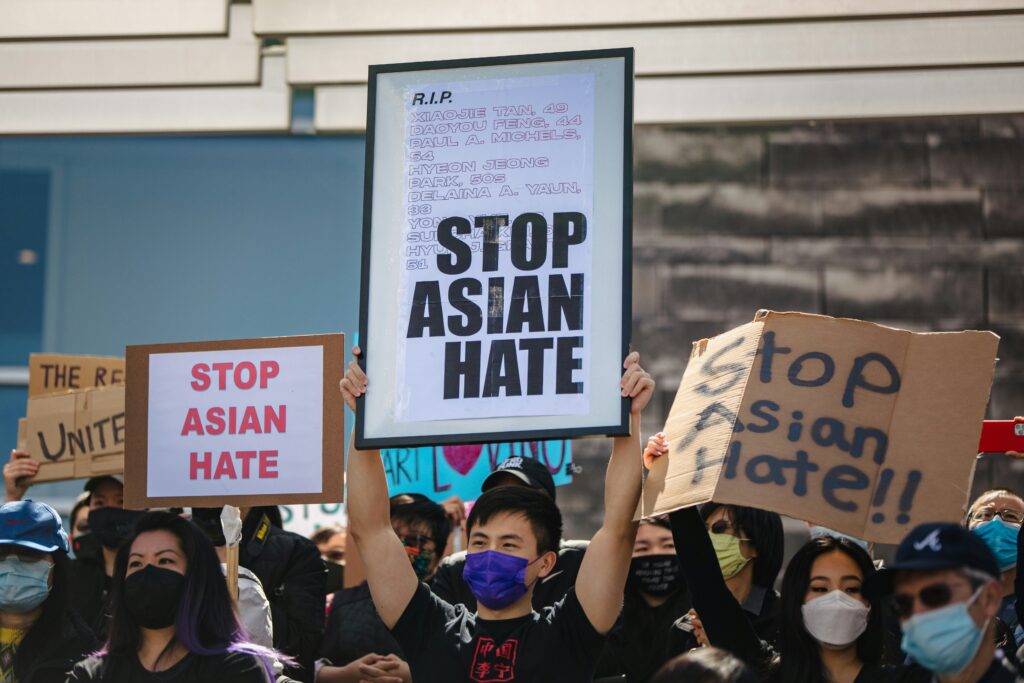
The rise in hate crimes against East and Southeast Asian people in the UK has increased at alarming rates post COVID-19 pandemic, as revealed by victims and support organisations. A significant number of cases fail to receive timely action, remain unresolved, or go underreported.
A report released by the UK Home Office in March 2025 found that 33 per cent of hate crime victims of hate crimes identified as Asians. The report also revealed a 19% increase in hate crimes targeting at Muslims.
Sun Hun Miao, an international student from China, highlighted the impact of identity-based jokes. After arriving in the UK in September 2024, she graduated from the University of Glasgow. During her time in the city, Sun recalled a troubling encounter with local teenagers. “We had just finished dinner; my friends Chloe, Zhou, Xue, and I were out for a walk in the city centre. It was supposed to be a lovely evening, until a teenage boy began mocking us”, she explained.
“The young male teenager approached us and shouted something mocking and racist, imitating ‘Asian sounds’ in a way that was clearly meant to insult us.”
When asked for details, Sun stated, “The young male teenager approached us and shouted something mocking and racist, imitating ‘Asian sounds’ in a way that was clearly meant to insult us. It was loud and deliberate”.
Sun’s friend Zhou said the boy’s accent was unclear and hard to understand. The incident took place earlier last year. The friends connected online to speak about the distressing event they dealt with in Glasgow during their studies from 2024 to 2025. They explained that all they remembered was that the teenager’s linguistic imitation was meant to mock their language.
Xue Yanzhe, one of the friends accompanying Sun, said the teenager’s use of a racial epithet indicated hostility directed at the Asian women. “He said ‘Ching Chung Cho’, his pronunciation unclear, but directed at the three women. I personally have never faced any discrimination as a Chinese man. There were many instances when I commuted alone, but I have never once come across anything like this.” He further added, “There were two teenagers, a girl and a boy. The girl was playing on the phone while the boy used the racial slur. When we confronted him, and asked what he had just said, he appeared frightened, when a man across the street walked towards us and began to ostracise us as if we were threatening the teenagers. Eventually, we walked away as there was nothing we could do.”
Gendered racism and the idea of the ‘easy target’
Furrah Riaz, Helpline Programme Manager at Amina -The Muslim Women’s Resource Centre, a Scottish organisation working to safeguard Muslim and minority ethnic women, shared crucial data collected through the organisation’s internal reporting app between January 2025 and December 2025. She explained that they received 21 calls reporting hate crimes, although they have not specifically come across hate directed towards South or East Asian women. “Incidents happen in schools frequently amongst students; the students tend not to report these issues for fear of being labelled a ‘grass’ and will often take matters into their own hands. Harmful attitudes are not being challenged, and given that young people are chronically online nowadays, it’s not surprising that perpetrators are targeting members of the public,” added Furrah.
The two international female students said that the incident left them traumatised and fearful of going out alone in the city. “I believe Asian women are often seen as subdued ,non-confrontational, and we become the ‘easy targets’, especially to teenagers who test boundaries for fun or for attention. This makes people presume that we won’t fight back or cause trouble,” Sun Hun Miao stated.
She also said it feels unfair that, despite minding her own business, she and her friends have become targets. Zhou explained that she was confused at the time of this incident, and after facing discrimination, she believes prioritising safety and avoiding discriminatory environments is essential.
“Incidents happen in schools frequently amongst students; the students tend not to report these issues for fear of being labelled a ‘grass’ and will often take matters into their own hands.”
She initially disagreed with Xue Yanzhe confronting the perpetrators, but after understanding that they were targets because they were women, she came to view his reaction as defensive and understandable.
The primary goal of the four students was to finish their education in the UK before relocating to their home countries. While Xue, Sun and Zhou relocated to China, Chloe returned to Taiwan.
Zhou and Sun Hun Miao believe the teenagers’ behaviour is fuelled by the widespread misinformation political narratives about Asian communities, with Asian women often single out.
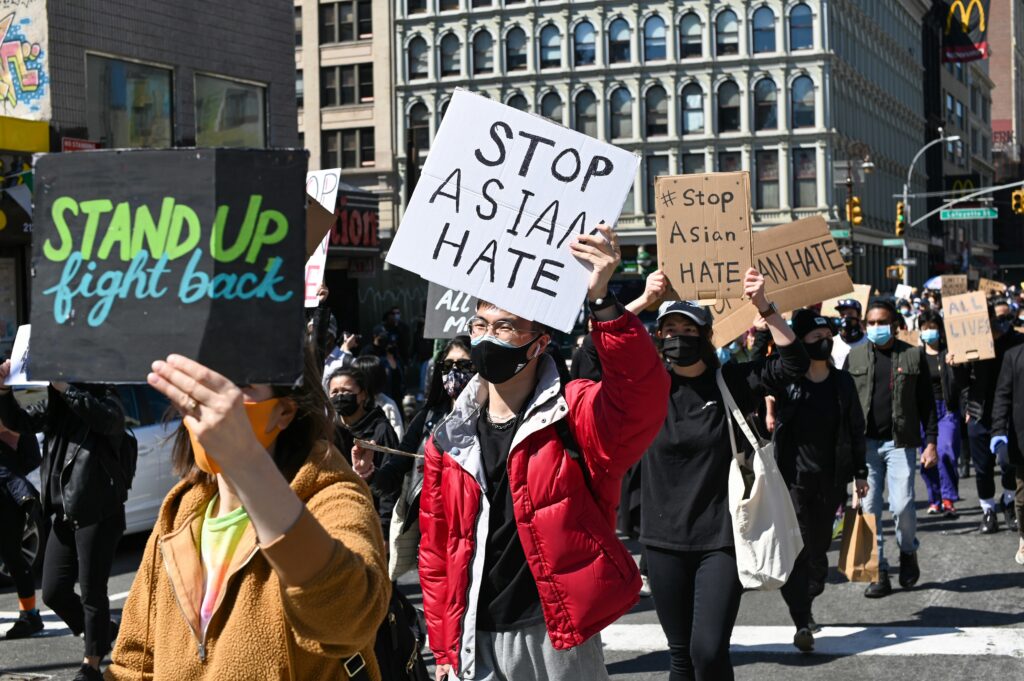
Photo by Robinson Greig at Unsplash
What the data reveals
A report co-authored by the University of Leicester and the charity Protection Approaches, released in 2024, revealed that in 75 per cent of recent experiences of being subjected to hate crime, the offenders were men, and 73 per cent of hate crimes targeting ESEA women are men.
Moreover, the study found that in 53% of recent incidents, participants believed the offender/s were under 30 years old, demonstrating that hostility and prejudice towards ESEA communities in the UK persist and are not confined to the past or to older generations.
The report also reveals that ninety-nine per cent of those who have been subjected to hate crime suffered negative impacts to their wellbeing; 90% said their experiences of hate crime had made them upset, 72% had been made to feel anxious, 61% had been made to feel vulnerable, 26% were made to feel depressed, and 4% felt suicidal. Despite such serious impacts, only 5% of victims had ever received emotional support from any agency or organisation.
Photo by Ben Mater
Racism in everyday spaces
Sisera Cheruvathoor, a South Asian woman from India, also reported being the victim of a hate crime last October. She used to work at a retail and reputable retail food outlet. During her initial days of work, a teenage boy placed his meal order. She struggled to understand and asked him to repeat the order; when he did, she said he was rude. Uncertain about what he said, she was helped by the manager training her, who refused to take the order and later explained that the boy’s words were verbally abusive.
Sisera recalled coming across various situations where teenagers made her feel frightened, “It made me feel unsafe, even more than situations involving adult men”, she said. Once, on the way back home, she came across a group of high schoolers who were mocking and making hand gestures intended to demean a race. Sisera explained that after these experiences with teenagers, her immediate reaction would be to examine the perpetrator’s hands to ensure her safety. She also said that in most of these incidents, she froze in the moment, and it took her days to understand what happened.“People who come abroad come from different cultures, while some impose their culture upon other individuals, which I don’t encourage. The other teens are influenced by the misinformation spread on the internet,” she explained what she believes is driving this behaviour among teenagers.
Sisera expressed that these experiences often reminded her that she didn’t belong to the community “Anyone who comes to this country takes time to adjust, and such instances reassure you that you are not a part of this community.”
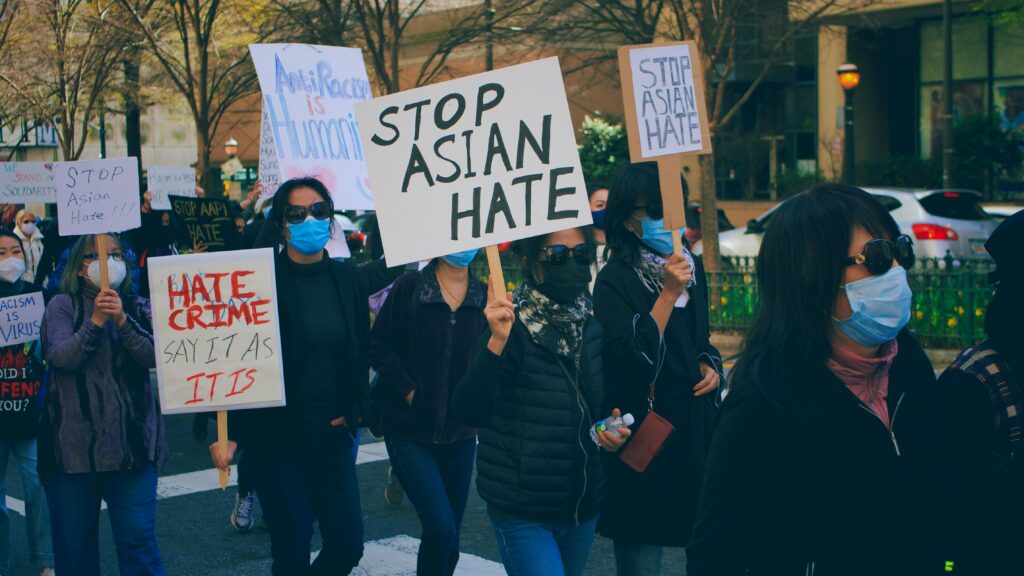
Photo by Kareem Hayes
The silence around reporting
While teenage hate directed towards Asian women remains an underreported issue, Amina MWRC provides valuable insights into the issue. Mariam Ahmed, Amina CEO, reiterated that they haven’t come across any reports or information related to teenage hate directed at Asian women. However, she added, “This does not suggest that such incidents are not occurring. Rather, it reflects the well-documented underreporting of hate crime and street harassment, particularly among minority ethnic women, who may feel that their experiences will not be taken seriously or are worried about what the criminal justice reporting process will involve.” For 28 years, Amina MWRC has been dedicated to helping women in need of support.
“I know anecdotally (from speaking to young family members and other younger people) that racism and anti-Muslim hate is on the increase. Younger people are consuming a lot of anti-migrant/far-right content and are becoming more emboldened to express their views openly and appear to have little or no fear of consequences,” explained Furrah Riaz.
“It reflects the well-documented underreporting of hate crime and street harassment, particularly among minority ethnic women, who may feel that their experiences will not be taken seriously or are worried about what the criminal justice reporting process will involve.”
Asian women victims of hate crimes in Glasgow shared how their sense of belonging in the city is negatively impacted by these distressing experiences. Moreover, they were unaware of the help available. Furrah shared valuable information and resources “From a safety and support perspective, Amina encourages any woman experiencing a hate crime or harassment to report the incident to Police Scotland. Amina is a registered third-party reporting centre, and we can support women through the reporting process where they do not feel able or safe to engage directly with the police.
Alongside this, women are encouraged to contact the Amina Helpline on 0808 801 0301 if they wish to talk further about what they are experiencing. Our Helpline offers confidential emotional support, practical advice and onward referrals. We recognise that the impact of such incidents often extends beyond the immediate event and can affect a woman’s sense of safety and belonging.”
Vaishnavi Gottumukkala is a freelance journalist specialising in mental health, social affairs, human rights, lifestyle, and film. Her work focuses on feature writing that explores the intersection of race, gender, and migration, with a commitment to amplifying underreported stories and giving voice to marginalised communities.