A ‘landmark court ruling’ ordering Sierra Leone to outlaw female genital mutilation is a triumph but when its government is silent — what’s next?
by Vicky Gayle
Almost 10 years ago, a young mother’s life changed forever. After seeking help for a minor dispute, Kadijatu Balaima Allieu was asked to visit a neighbour’s home. Shortly after she arrived, Kadijatu described being blindfolded and wrestled to the ground by several women she didn’t know were there. Overpowered and helpless, her genitals were cut.
Kadijatu was trapped inside the house for days, bleeding to death, she said, until being rescued by police and activists. “I’m a miracle sitting in front of you,” she told Migrant Women Press.
It was a nightmarish ordeal inflicted on Kadijatu by members of the influential women-led Bondo Society in Sierra Leone. Female genital mutilation — or FGM — is integral to initiation. But Kadijatu, then aged 28, wasn’t being initiated; she was sexually assaulted as punishment. Her only ‘crime’, she believes, was being an uncut woman.
Last July, the Economic Community of West African States (Ecowas) Court of Justice passed a “landmark ruling” against the government of Sierra Leone for failing to protect Kadijatu’s human rights and criminalise FGM.
The court ordered the government to “take immediate legislative measures to prohibit and sanction female genital mutilation” and “identify and prosecute the perpetrators” responsible for Kadijatu’s injuries.
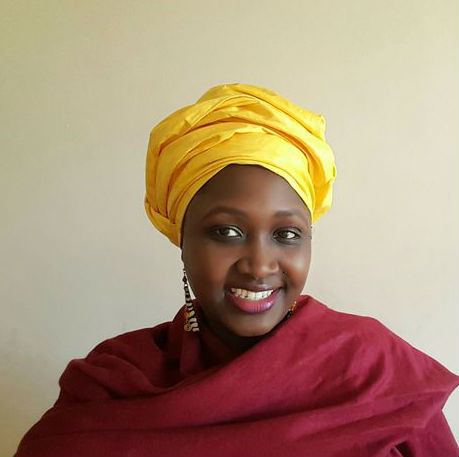
Kadijatu Balaima Allieu. Credit: We Are Purposeful.
A private prosecution has been initiated by Kadijatu against the woman alleged to have cut her genitals.
The judgement is a major legal triumph in the fight to protect the rights of women and girls — one which took about five years to achieve. Its significance stretches across the African diaspora, including the UK where women and girls are at risk of FGM.
However, six months on, Sierra Leone’s president, Julius Maada Bio, who is also Ecowas chairperson, remains publicly silent on the matter.
“[The government] is downplaying it and pretending nothing is happening, but something is happening and it’s wrong,” Kadijatu said, who is yet to be awarded $30,000 (£21,740) compensation as part of the Ecowas ruling.
The Forum Against Harmful Practices (FAHP), a coalition of organisations across Sierra Leone, and the NGO We Are Purposeful, filed the case alongside Kadijatu, in which her pain and suffering was called “torture”.
“I’m a miracle sitting in front of you.”
Ishmael Cole is a national coordinator for the FAHP whose goal is to see FGM abolished.
He said: “We were expecting Ecowas would have joined us in ensuring the compliance of the ruling but we are not seeing them step up as expected…This ruling is not just for Sierra Leone, but for the entire sub-region of the West African States.”
Behind the scenes, ministers have acknowledged the judgement and there has been “fruitful engagement” with individuals, Ishamel noted. “But as we speak, we continue to see a very snail’s pace process in moving forward.”
National data from 2019 indicates 83% of women and girls between age 15–49 have undergone FGM, down from 90% in 2013. Women and girls as young as nine years old have died as a result.
There are no laws banning FGM in Sierra Leone, but the country is a signatory to the Maputo Protocol, a legally binding treaty that says countries should eliminate all harmful practices against women, including FGM.
Meanwhile, the government has missed opportunities to strengthen safeguards for women and girls, such as through the National Strategy for the Reduction of FGM. “The strategy was expected to be implemented between 2016 and 2020, but unfortunately, because of political bottlenecks, the strategy did not get approval for its implementation,” Ishamel explained.
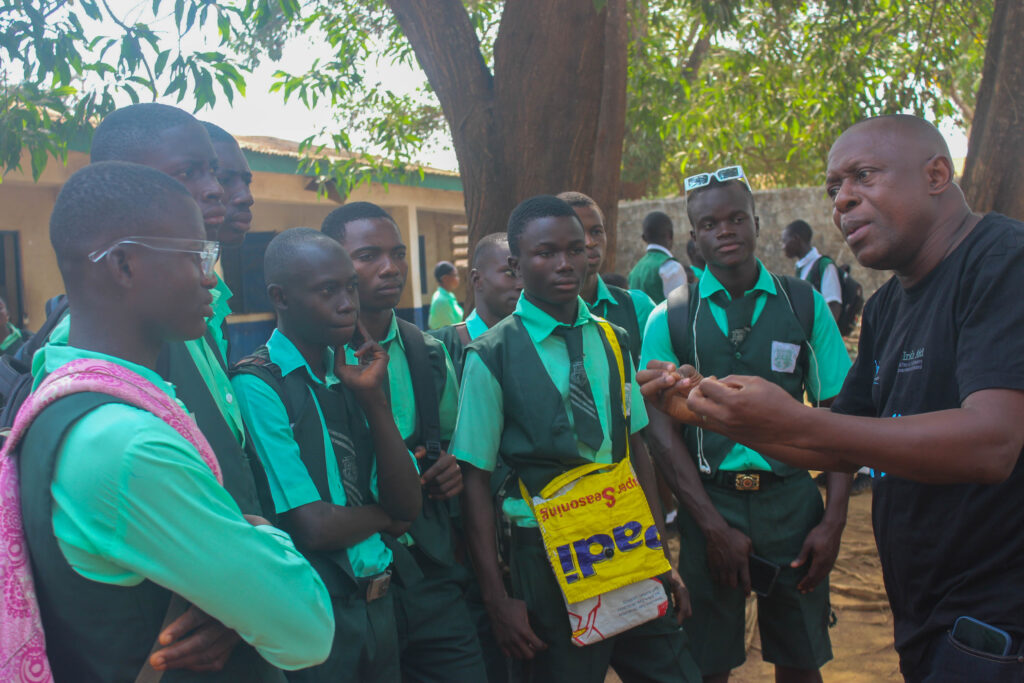
Ishmael Cole. Credit: Ishmael Cole/ FAHP.
Then, last year, the updated Child Rights Act 2025 failed to criminalise FGM — a huge blow for hopeful campaigners.
The government’s message is “very conflicting”, Ishamel believes. There are also politicians privately condemning FGM but continuing to publicly support initiations to gain women’s votes, he explained.
“They will tell you, they do not allow their daughters to go through FGM because they know the consequence of it…‘But when we go out of this place again, we do what our people tell us to do because we want their votes’.”
He added: “The political will in the fight against FGM is not as vibrant as we expected.”
A spokesperson for the Ecowas Court of Justice confirmed its decisions are legally binding on Member States who should “immediately” act to execute them. Non-compliance can result in sanctions being imposed on Member States that “persistently fail to honour their obligations”.
“The political will in the fight against FGM is not as vibrant as we expected.”
“The Court remains firmly committed to its mandate of protecting human rights and fundamental freedoms within the West African region… The courage of individuals who have sought justice before the Court and have been vindicated through the Court’s judgments have strengthened the regional human rights framework,” the statement continued.
The government of Sierra Leone didn’t respond to Migrant Women Press’ requests for comment.
A spokesperson for the UK Foreign, Commonwealth and Development Office (FCDO) said: “We urge the Government of Sierra Leone to implement the ruling and introduce stronger protections for women and girls.”
They added: “Female genital mutilation is a serious human rights violation and one of the most extreme manifestations of gender inequality.”
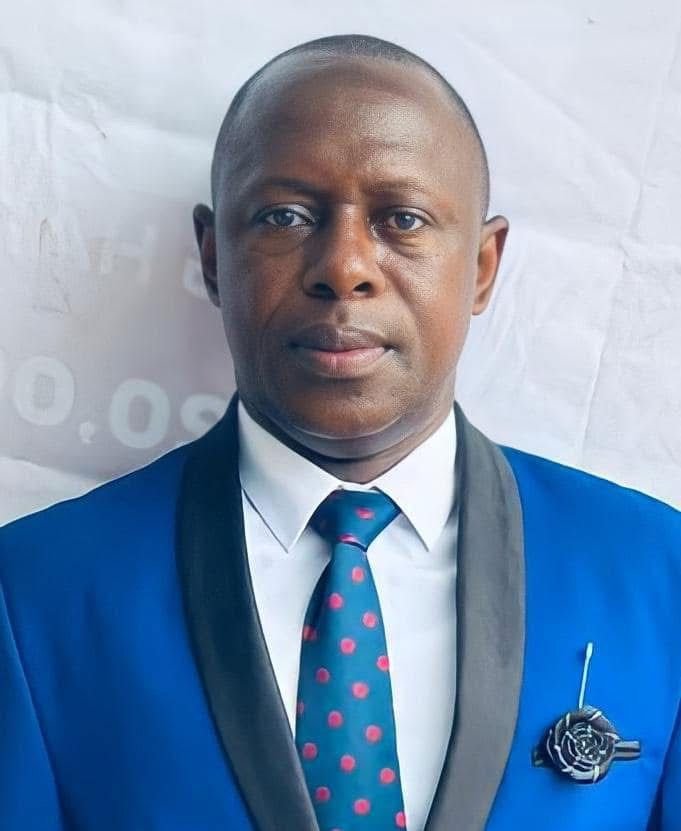
Ishmael Cole. Credit: Ishmael Cole
“FGM is a corrupt and evil act”
Female genital mutilation describes all procedures that involve removing any of the external female genitalia or other injury to the vulva for non-medical reasons.
An estimated 90% of women belong to the Bondo Society in Sierra Leone, which “continues to be a powerful driver of FGM”, the UK charity Foundation of Women’s Health Research and Development (FORWARD) wrote in a 2017 report.
To join and mark their transition into maturity, a woman or young girl must be cut by a ‘sowei’ — the name given to high-ranking members of the Bondo Society.
They’re warned not to speak about it so those following after them are unaware they will be harmed. The threat of witchcraft and curses has largely succeeded as a tool to guarantee their silence. It’s this “secrecy and taboo” that gives the pervasive society “its strength…preventing challenge or question of its practices”, the report adds.
Complex socioeconomic factors influence initiation into the Bondo Society, but patriarchy, poverty and gender discrimination are at the heart of it.
“You can never be healed from the experience because it’s an everyday trauma.”
Membership affords women a higher social status. Bondo offers sisterhood and celebration in a society that devalues women, a sense of social acceptance in a society driven by reputation, and primes women for marriage in a culture that ties women’s status, freedom and financial security to men.
For the soweis who perform FGM, they earn money.
The clitoris, widely considered to be the most sensitive organ in the human body, is removed to reduce sexual desire so women stay faithful to their husband.
“FGM is a corrupt and evil act,” Kadijatu said. “They are cutting girls and not sharpening their intelligence, their mindset, their thinking.”
FGM ranges in severity from type 1–4. It causes irreversible damage and complications from chronic pain and infections to problems having and enjoying sex. Women experience difficulties urinating and giving birth, and post-traumatic stress.
“You can never be healed from the experience because it’s an everyday trauma. When you go to the toilet or take a shower, when you touch down there, it sends a message to your brain, even if you want to ignore it. You realise something was here, but now it’s missing, so you can never be healed from such a trauma,” Kadijatu explained.
There have been repercussions for Kadijatu being a face of this movement to change hearts and minds in Sierra Leone. The 37-year-old has fled the country twice for her safety. Her dreams of completing her business administration degree and studying a master’s were also cut short when she was assaulted. Yet, she feels “fulfilled”.
“I’ve been shifted from my goal, but if this is the price I have to pay, and that’s what God wants me to do, I’m happy doing it.”
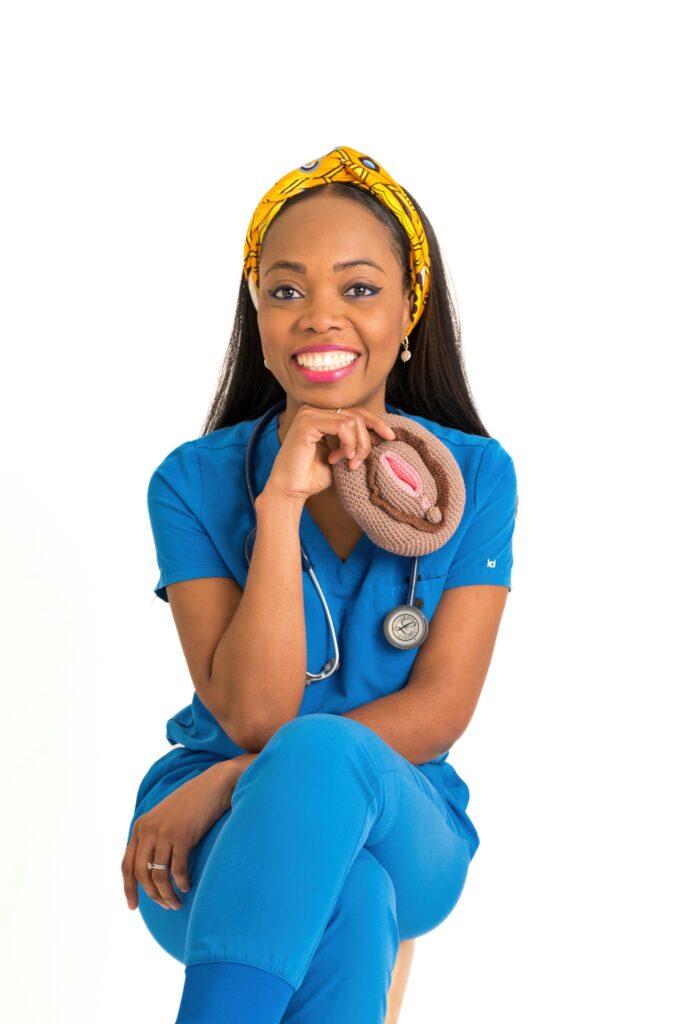
Dr Aziza Sesay. Credit Dr Aziza Sesay
The Role of Education
Despite the obvious challenges, there is a lot to celebrate in Sierra Leone. Women’s rights campaigners have seen how people are willing to change when the approach is “culturally-friendly” and without condemnation, Ishamel said.
Some of their successes include bylaws being passed in some “chiefdoms” to ban FGM and being able to engage men and boys in the fight against FGM, which is “critical”, he said.
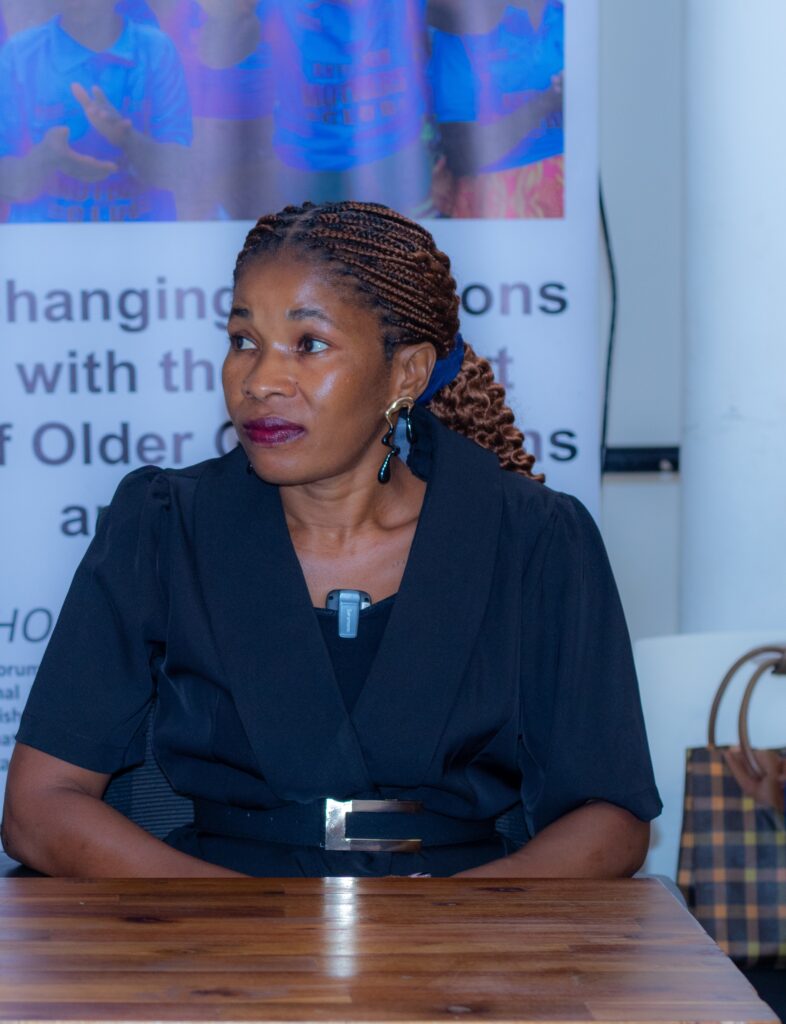
Behind Ishmael during the interview is a campaign poster: ‘Yes to Bondo, No to FGM/ cutting’ it reads. It reflects the change he and others strive to achieve, and makes the seven ‘bloodless’ or ‘alternative’ rites of passage the FAHP has organised a huge triumph.
He said: “This is very much historic and innovative for us when you know how connected FGM is to Bondo. It shows there is some form of acceptance taking place at community level.”
“We put ourselves in their own shoes.”
Realising these took major engagement with women’s groups, community leaders and soweis, who were encouraged to take ownership of the change.
“We put ourselves in their own shoes. We are not oblivious of the fact FGM has been in the country for decades, and therefore trying to eliminate FGM is not easy. In our ‘Yes to the Bondo culture, no to the FGM’ for us, we believe that the Bondo culture is a noble culture. We are all Sierra Leoneans.”
Education underpins the work organisations are doing on the ground as they urgently address conflicting messages about FGM. Confusion delays progress while education saves lives.
Dr Aziza Sesay is a Sierra Leonean GP and health educator in the UK, who is “obsessed with the vulva”. Her engaging online platform, Talks with Dr Sesay, dissects women’s health and gynaecological health concerns so women feel empowered to look after their bodies and less embarrassed to seek medical advice.
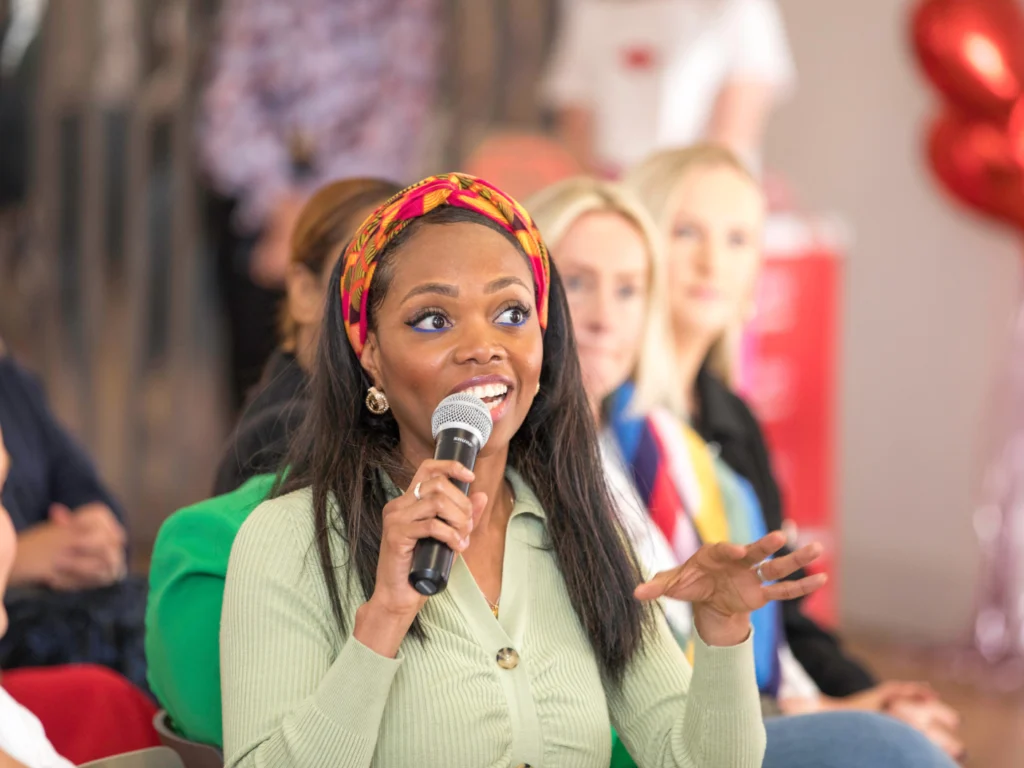
Dr Aziza Sesay. Credit Dr Aziza Sesay
She said: “Education and awareness, and also removing the shame, stigma, silence and taboo around these topics can prevent girls dying from a procedure like FGM — which is completely heartbreaking and avoidable — or getting traumatic infections and complications.”
Whichever stage Aziza steps on, her crocheted vulva will be shown to the audience. There are also smaller keyring versions and t-shirts with the words vagina, vulva and clitoris on them. ‘They are not bad words’ is printed on the front.
“One of the big reasons I want people to know the different parts of the vulva and what a typical vulva looks like is because there are some women who don’t even know they’ve been cut,” she explained.
“It was upsetting to read Kadijatu’s story and that even to this day FGM is still so common in Sierra Leone.”
She added: “When I shared her story on social media, I think some of the naysayers who don’t quite understand why I’m so explicit when speaking about the vulva and why I’m pushing this narrative for it to be normalised, finally they understood.”
Aziza plans to run more menstrual health workshops in Sierra Leone later this year. “You can get scared doing this type of advocacy work and activism with fears around what happened to Kadijatu happening again, but at the end of the day, you’ll put yourself out there because this could be the difference between a girl dying because of these procedures or living with the life-long trauma caused by it.”
“Education and awareness, and also removing the shame, stigma, silence and taboo around these topics can prevent girls dying from a procedure like FGM.”
The Foreign Office provides multi-year grants to 19 frontline organisations in Sierra Leone, many of which focus on ending FGM and supporting survivors.
Meanwhile, its flagship programme, The Girl Generation Africa-Led Movement to End FGM, will finish in October. A joint letter from the Women and Equalities Committee and International Development Committee warned this “presents a serious risk to women and girls globally”.
Jan Macleod, manager of the Women’s Support Project in Glasgow, said: “We need governments to take a clear position with legislation in place to protect women and children.
“Equally important is that resources are provided to ensure the legislation is actively and effectively implemented, and that those affected by FGM are supported and protected.
“Effective legislation sends the message that the practice will no longer be tolerated, and resourcing community organisations and activists to work within communities will support lasting change.”
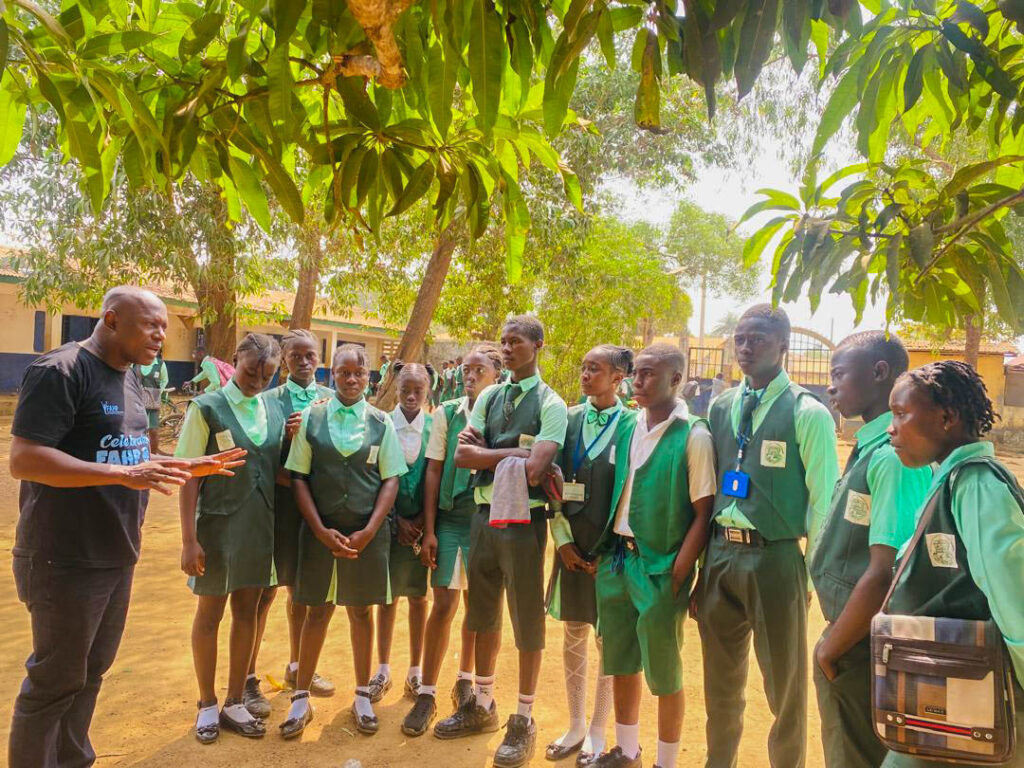
Ishmael Cole. Credit: Ishmael Cole
Ishamel echoes this sentiment. The UN’s deadline for FGM to be eradicated worldwide by 2030 signals an urgent need for the Sierra Leone government and its African partners to “triple efforts”, he told us.
“The Ecowas ruling has a very significant implication. It sets a monumental precedent for the protection of women and girls across the region. We expect the UN’s human rights bodies, and regional institutions like the African Union, to monitor Sierra Leone’s compliance with the judgement.
“Sometimes it’s not a matter of just meeting with the government behind closed doors. Let us have public reports on progress.”
Kadijatu will continue to teach people about consent and push for communities to take shared responsibility for women and children’s welfare.
“I want the diaspora women, the international women, to come to our aid because a lot of people have similar stories. A lot of people have been silent because of this barbaric act,” she said.
“At the age of 28, I thought I was safe, but within a twinkle of an eye, a nightmare broke out that I can never forget. There is no safety in our community except if every girl is safe.”
Learn more about FGM:
https://fgmnetwork.org.uk/fgm-support-services/
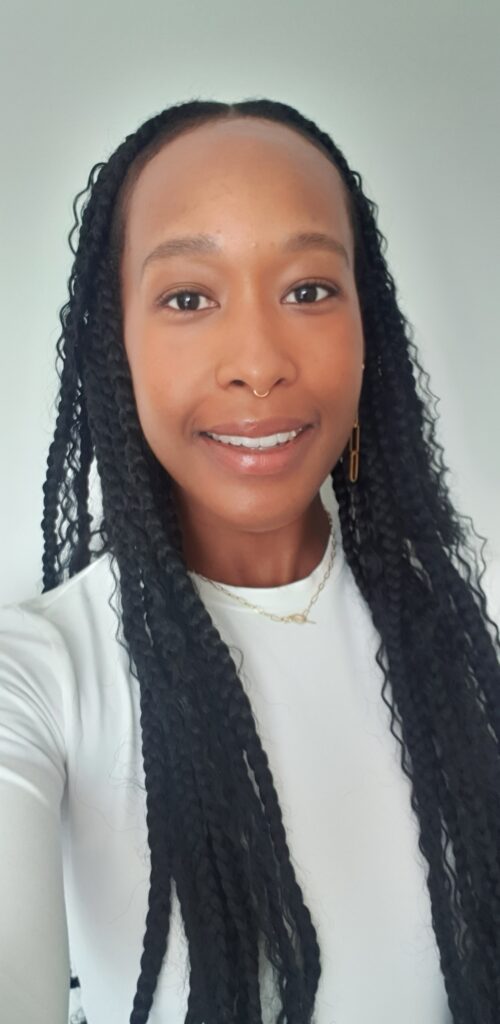
Vicky Gayle is a freelance investigative journalist and editor, who has reported on health inequalities, disability, housing, migration and precarious work. Her career began in regional news and she co-led Newsquest’s first data investigations unit before working at the Bureau of Investigative Journalism (TBIJ). Her time is now split between journalism, including a cross-border environmental investigation, and freelancing at BBC StoryWorks. When she’s not reporting compelling stories, she’s finding new projects to work on, teaching and mentoring. Find her stories at Migrant Women Press, The Voice Online, Black Ballad, The Observer, Refinery 29, The Daily Mirror, Channel 4 News and more.