Across Scotland, Black immigrants are reshaping what home and belonging mean in everyday life. Through six intimate conversations and her own lived experience, Omowunmi Ola-Edagbami explores the quiet dualities of loss and reinvention that come with building a life in a new country.
by Omowunmi Ola-Edagbami
The first time I realised my children were becoming Scottish was the day I overheard them arguing in accents that weren’t mine. They were not born here, but they have spent enough of their childhood in Scotland for its rhythms to settle into their voices. Their accents were sharp, playful, confident and entirely Scottish. In that moment, I felt pride tug at one side of my heart and a quiet ache tug at the other.
This is what migration does to you. It draws you in different directions. It stretches your idea of home until it becomes wider, softer and more complicated than the place you left behind. It was also the moment a question settled in me, one that has stayed with me ever since:What does home really mean for Black immigrants living in Scotland?
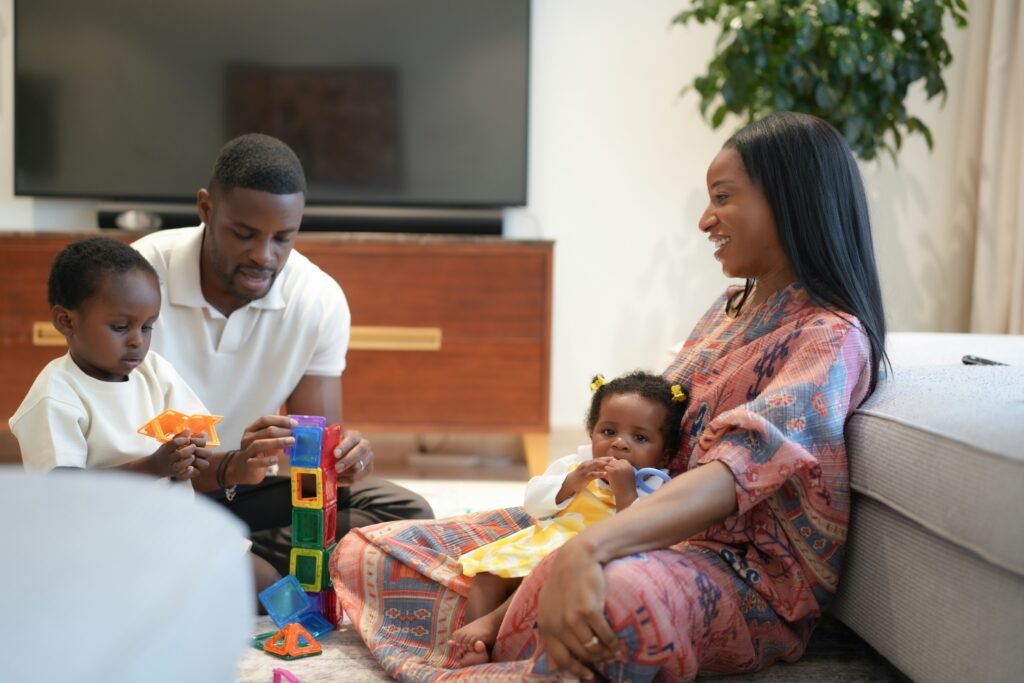
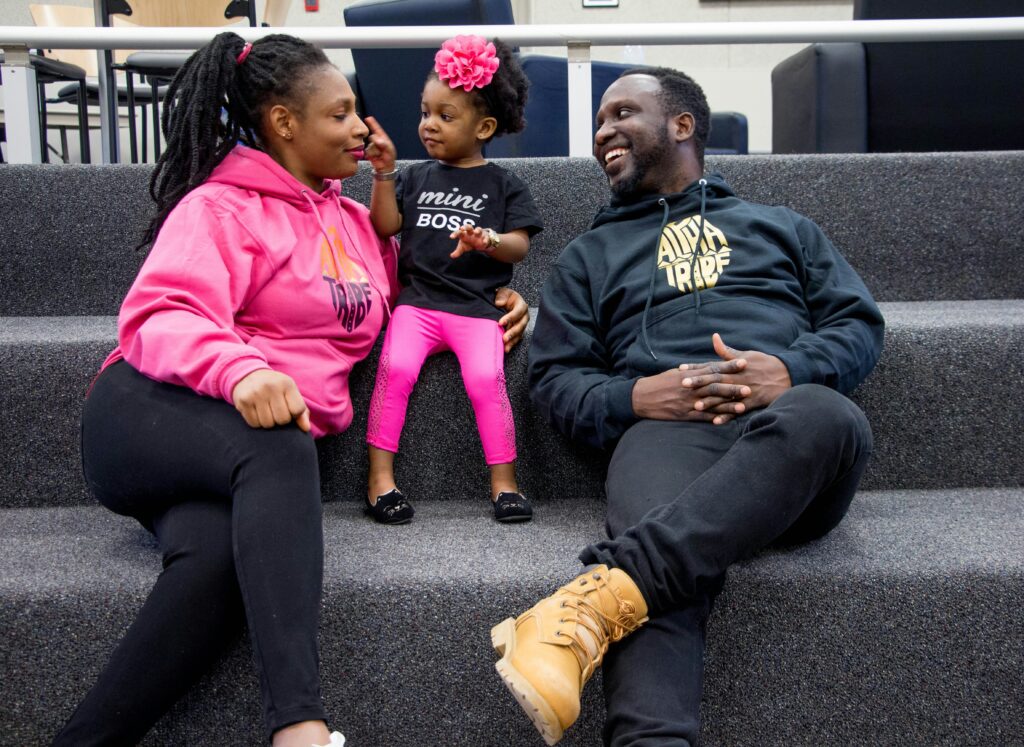
A Black family (father, mother and two young children) playing together. Photo by Abdul Raheem Kannath on Unsplash.
Scotland’s 2022 Census shows that Black people make up less than 1% of the national population, a small but steadily growing community shaped by migration, work opportunities, and education routes. Unlike in England, where people identifying as Black account for about 4% of the population, Black immigrants’ experiences in Scotland are often under-reported, with stories scattered across towns, cities and villages. This reality shapes how we navigate identity, belonging, and memory. It also makes the question of home more layered for us, because we are building it at the same time as we are searching for it.
This is what migration does to you. It draws you in different directions. It stretches your idea of home until it becomes wider, softer and more complicated than the place you left behind
To better understand the experiences of belonging for Black immigrants living in Scotland, I wasn’t looking for textbook definitions or the polished language organisations often use when discussing diversity, equality and inclusion. I wanted the real thing. The thing we feel in our bones.
So I spoke to six people, five women and one man. Each carried their own version of home while building a life here with memory in one hand and hope in the other.
What I found wasn’t a single narrative but a quiet collection of truths that reminded me that we are not monoliths.
A Black family (mother, father and baby) enjoying time together. Photo by Trust Tru Katsande on Unsplash.
Arriving: The First Shock, The First Soft Landing
For some, Scotland arrived early.
Ada, aged 39, who moved from Nigeria as a teenager, is now a senior executive in one of Scotland’s major institutions and holds two honorary doctorates. Yet she remembers the early years vividly, the accent that marked her, the silence that followed certain introductions. “You learn to adapt fast,” she said, “but you never forget what it felt like to be new.”
For others, the country came later in life.
“You build a home in two places at once. Your body is here, your heart is divided.” Rudo
Rudo, a 44-year nurse from Zimbabwe, spent her first three years in Scotland alone while her children remained back home. She told me,“You build a home in two places at once. Your body is here, your heart is divided.”
Selina, a 25-year-old old Ghanaian student, arrived in Aberdeen two years ago with a suitcase and full responsibility for her tuition and bills. Her understanding of home has shifted from “where I came from” to “where I’m surviving and slowly thriving.”
Daniel, a Ghanaian father, spoke about arriving through the student route at age 48, while his wife became the primary breadwinner. “It humbled me,” he said. “But it also showed me how strong we are when we move as a family.”

A Black family (father, mother and two young children) gathered around a computer screen. Photo on Unsplash
Identity: Who Am I Becoming Here?
Identity is subtle until something pushes it to the surface. An accent, a comment about your hair, or a moment where you switch between cultures without thinking.
Thandi, a 41-year-old HR executive from Malawi, said,“I came here whole. Scotland didn’t break me. It reshaped certain things, yes, but I remain myself.” Her voice was calm, steady, showing someone building belonging and ambition on her own terms.
“I feel myself changing in small ways… but I don’t feel lost.” Selina
Ada, who grew up in Scotland, now, occupies rooms her younger self never imagined. Yet she admits,“In Scotland, you’re constantly adjusting. You’re never quite finished. I think most immigrants feel the same.”
Even Selina, the youngest interviewee, aged 23, captured it simply; “I feel myself changing in small ways… but I don’t feel lost.”

Black family (father, mother and two young children) watching TV together. Photo on Unsplash
Motherhood & Family: Building Home Across Borders
For many of the women I spoke with, motherhood shaped their understanding of home most deeply.
Rudo raised her children across continents. “They now sound like they were born here,” she laughed. “And I love it. But I make sure home isn’t lost in their hearts.”
Grace, a Nigerian mother of four, lives in Scotland while her husband works in Nigeria and visits a few times a year. “You don’t realise how strong you are,” she said, “until you rebuild your life in a new country while holding another life together across an ocean.”
“You don’t realise how strong you are, until you rebuild your life in a new country while holding another life together across an ocean.” Grace
Daniel reflected on the shift in family dynamics.“When we first came, my wife became the provider because I could only work part-time. You learn humility. You learn partnership.”
These conversations reminded me that home is more than a place. Sometimes it’s a responsibility, sometimes it’s a memory you refuse to let fade. Sometimes it’s a child learning to belong to two cultures at once.
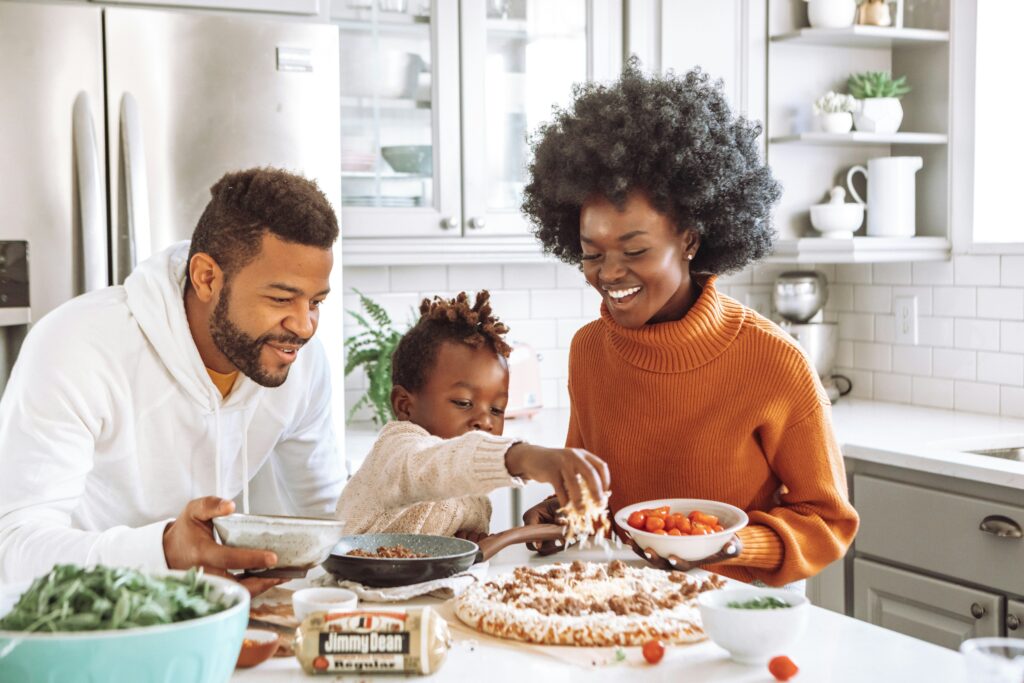
A Black mother, father, and baby cook together in their kitchen. Photo by Jimmy Dean on Unsplash.
Belonging: The Quiet Ways We Learn to Stay
It became clear as I listened to each person, that belonging rarely arrives as a single, defining moment. It reveals itself in the quiet, almost forgettable details of daily life, the moments others often miss but that immigrants cling to.
For Rudo, belonging sounded like a stranger slowing down on a snowy street to steady her as she walked to a night shift.
For Selina, it was the simple relief of hearing her colleague pronounce her name correctly without stumbling.
For Grace, it was the neighbour who left food at her door during a week she felt stretched thin.
And for Daniel, it was the church community that became a steadying force long before anything else in Scotland did.
What does home mean when you are both rooted and uprooted at the same time?
Every conversation also showed that belonging is shaped just as much by friction as it is by kindness. A stereotype slipped into a meeting. A well-meaning question that cut a little too deep. The familiar, exhausting, “Where are you really from?”
As I listened, I realised why these moments stayed with them. When you are an immigrant, belonging is not something offered readily. It is something you learn to build, episode by episode, gesture by gesture.
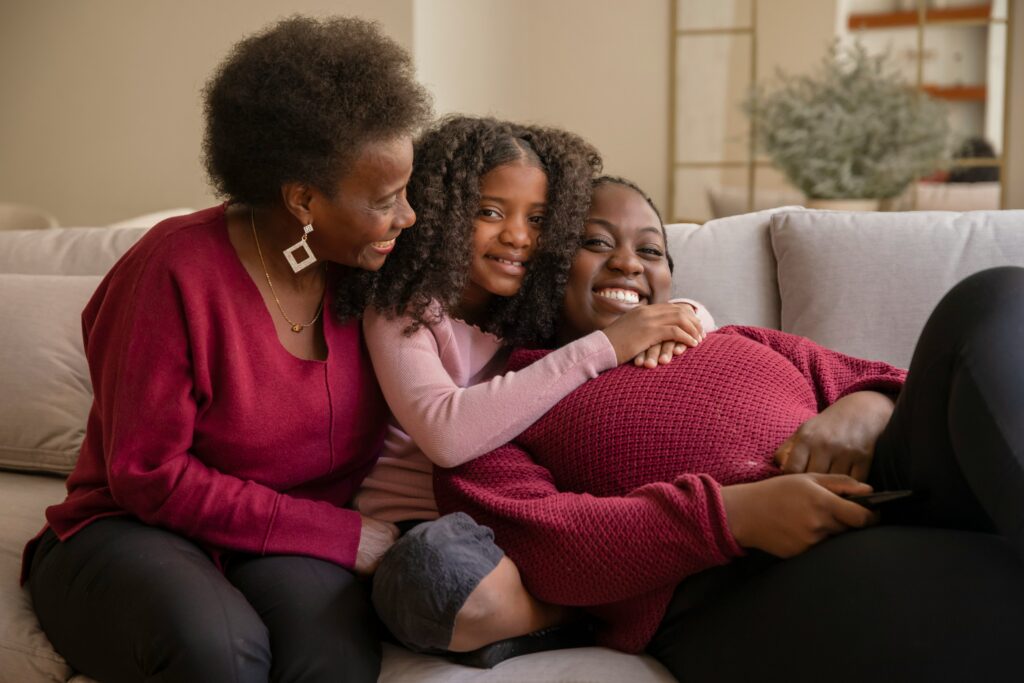
Three Black women, including two adults and one child, together. Photo by Pablo Merchán Montes.
As someone who moved from Nigeria to Scotland three years ago, I was reminded about how belonging sometimes felt like a tide coming in and out. Some days inching closer, other days pulling away. The people I spoke to helped me see that belonging here is something that has now turned into a practice and that it lives in the ways we learn to stay.
In many ways, Black Scottish Stories is my own attempt to answer the very question at the heart of this article:What does home mean when you are both rooted and uprooted at the same time?
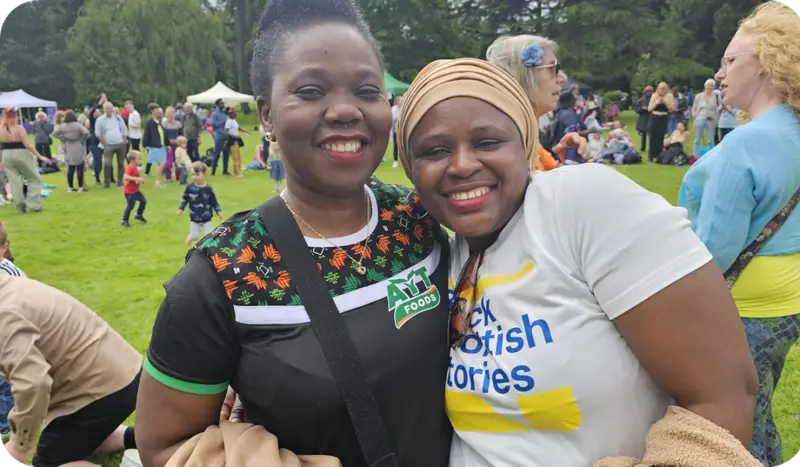
Black Scottish Stories community. Photo by Black Scottish Stories.
Building a Collective Sense of Belonging: The Black Scottish Stories
Black Scottish Stories, a platform I created dedicated to sharing the lived experiences of Black immigrants in Scotland, was born from a quiet but persistent dissatisfaction, the kind that grows when you live in a place yet rarely see yourself reflected in its stories.
When I moved to Scotland, I noticed something: we, Black immigrants, were present everywhere; in healthcare wards, university classrooms, community halls, supermarkets, construction sites, tech hubs and yet our voices were scattered, our stories fragmented, and our cultural contributions often invisible. Black Scottish Stories became my way of gathering these fragments, arranging them into something whole, and offering us a mirror we could recognise.
One of the most remarkable moments in this journey came when in a previous interview, the guest said, “Home is wherever I don’t have to explain myself.” That line stayed with me. It captured the tension many immigrants carry. It showed the longing to belong without shrinking or translating ourselves.
Home is wherever I don’t have to explain myself.”
Another unforgettable moment was when one of the interviewees for this article, Rudo, described raising her children between two cultures as “building home through memory and survival.” These interviews showed me that storytelling is a way to heal as well as document. The interviews gave me a sense of collective understanding that I didn’t realise I needed.
This project matters because stories shape perception. When Black immigrants are only seen through the lens of struggle or policy, we lose the fullness of our humanity. Black Scottish Stories restores that fullness. It shows ambition, joy, cultural pride, humour, and the complex negotiations we make every day as we navigate identity, careers, relationships, faith, and motherhood in a new country. These stories allow us to be seen as contributors, builders, and thinkers, not just as migrants passing through systems.
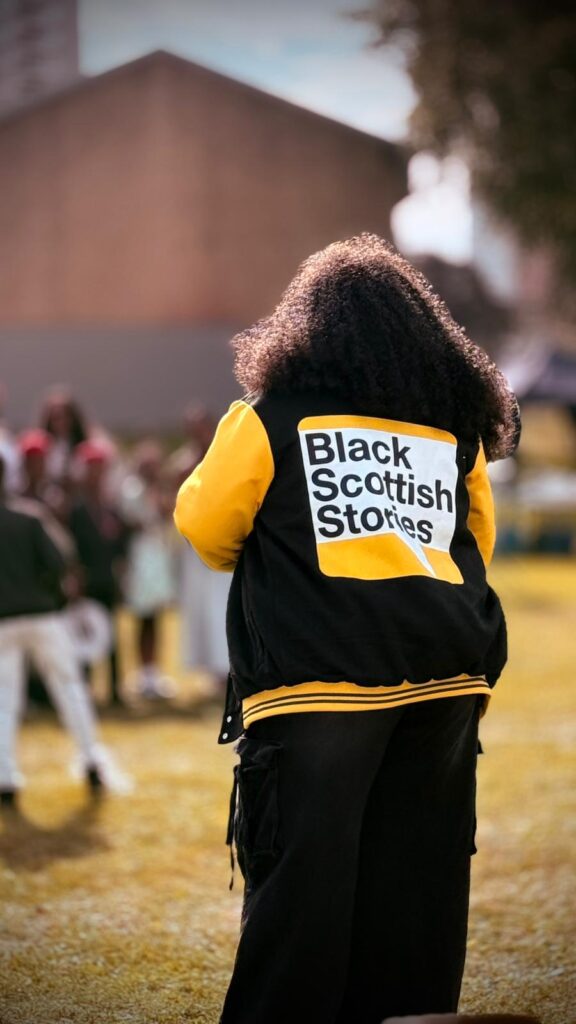
Back view of a woman wearing a Black Scottish Stories jacket. Photo by Black Scottish Stories.
My vision for Black Scottish Stories is to build a living archive, a digital home where our experiences are preserved, honoured, and accessible. I want the platform to grow into a space where Black immigrants across Scotland can upload their stories, explore others’, and recognise themselves as part of a wider tapestry. In the long term, I see Black Scottish Stories expanding into short films, exhibitions, children’s content about belonging, and school resources that help the next generation understand what multicultural Scotland truly looks like.
My personal connection to the six people I interviewed for this article is simple: We are all learning to build home while holding memory in one hand and adaptation in the other. Their experiences – separation from family, shifting gender roles, financial sacrifice, career reinvention, raising children who speak with accents different from their own – echo pieces of my own journey.
Listening to them reminded me that while our stories differ, the emotional threads are familiar: hope, resilience, loneliness, reinvention, and the soft but insistent desire to belong without erasing who we are.
*Partial names and identifying details have been withheld to protect the privacy of interviewees.
This article was produced as part of the Migrant Women Press Fellowship Programme 2025.
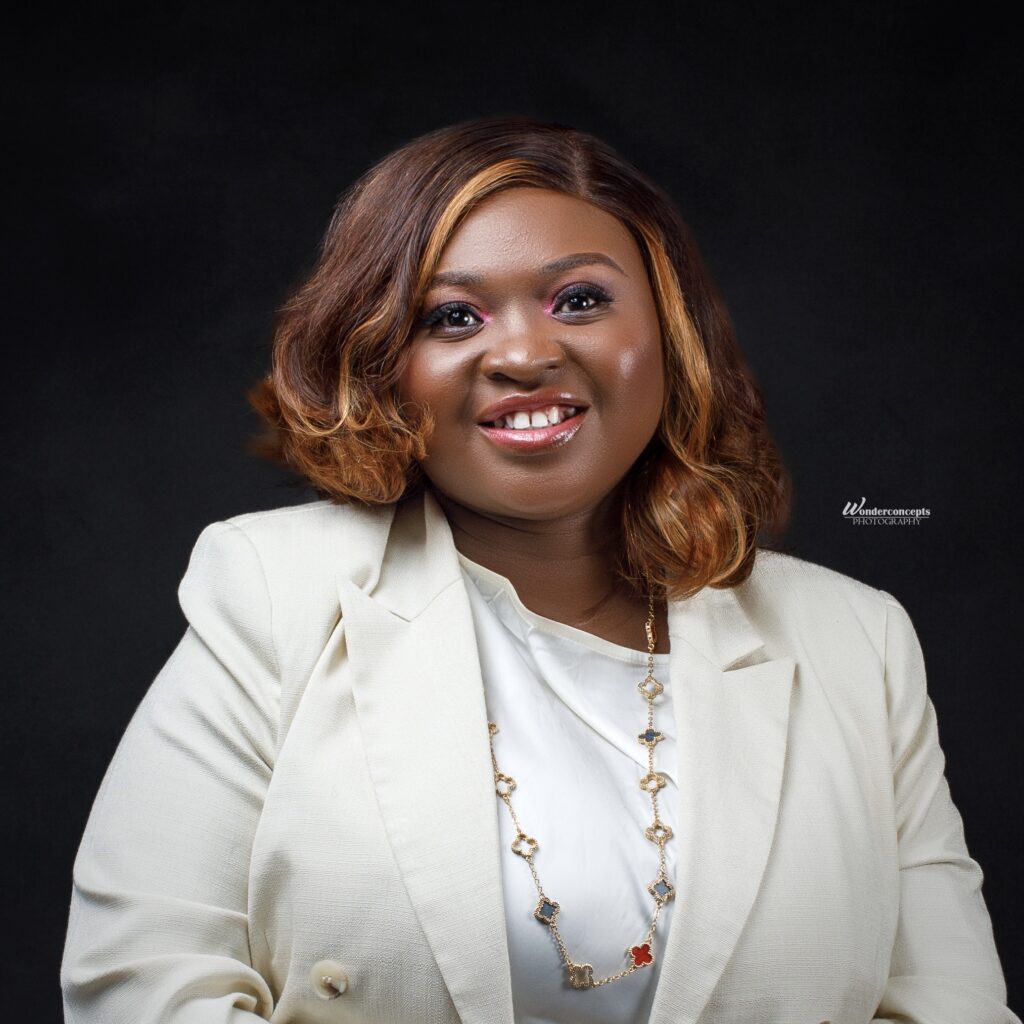
Omowunmi Ola-Edagbami is a digital storyteller and community builder with experience across Nigeria and the UK. She explores how stories shape belonging, identity, and home. She is the founder of Black Scottish Stories, an AI-powered platform documenting the journeys of Black immigrants in Scotland and amplifying their voices and experiences. You can reach out to her via omowunmi@blackscottishstories.ai