
Citizens Advice Bureaux provides holistic support on issues from welfare benefits to immigration and housing. For people like Gloria*, trafficked into the UK and seeking stability that support is crucial
by Gil Long
Gloria* came to Parkhead Citizens Advice Bureau seeking help about an application for British Citizenship. She had been trafficked into the UK in 2017 and granted refugee status in 2019 and indefinite leave to remain in 2024. Since arriving in Scotland Gloria had trained and is now working as a nurse but, she asked: “Would the fact that I was trafficked disqualify me from satisfying the good character requirements for British citizenship?”. The adviser researched the new regulations introduced in 2025 and was able to tell Gloria that if immigration regulations had been broken as a result of trafficking this should not count against her because it was ‘beyond her control’.
You might well have seen the blue round Citizens Advice sign with the yellow writing on the high street but what are Citizens Advice Bureaux (CABx) and what do they do?
CABx have two aims: to deliver advice and information services and to campaign and lobby for legal and policy changes to improve people’s lives. You will find CABx offices throughout Scotland from Shetland to Dumfries and Stornoway to Fife. And don’t be put off by the title ‘citizen’; our services are open to all whether they have settled status or are in the process of migration.
All bureaux are bound by the CAB principles; services are free, confidential and independent. The role of Citizens Advice Scotland (our national network) is to provide services for bureaux, for example, training for staff and volunteers, a digital information system and quality assurance to ensure that clients receive up to date information relevant to their issues.
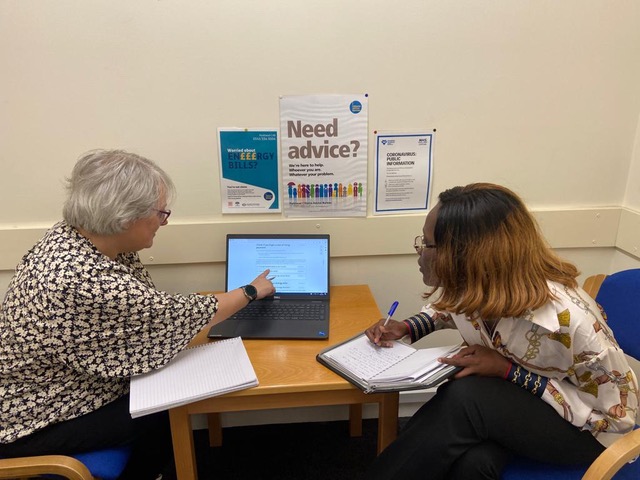
Helping people navigate complex, overlapping problems through holistic support
CABx pride themselves on offering a holistic service. People seldom need help with one issue. A problem of domestic violence, for example, might involve information about the law but also help with housing and welfare benefits. Our commitment is to deal with all the issues within our competence. Nationally around half of our enquiries involve welfare benefits, but we can also offer help with issues of debt, housing, energy, employment and consumer rights and immigration.
Immigration is perhaps an area of particular interest to MWP readers. The law is notoriously complex and bureaux are trained and licensed by the Immigration Advice Authority to offer up to level 1 advice which covers advice on rights in law that meet current immigration rules. This incudes being able to help with issues such as: working out if someone is a British citizen; checking if a client’s immigration status allows them to work; advising on applications for entry of a client’s partner, spouse or children or entry on the points based system for the purpose of work. Other typical areas of advice include helping people with applications for British citizenship, advising about EU settlement status and refugees about ‘leave in line’ applications or how to register changes of circumstances with the Home Office.
These are just a few examples of the type of help CABx offer. For more complex cases (level 2 advice) we refer our clients to colleagues in law centres or solicitors who specialise in immigration issues. For example, in our case study above, the adviser referred Gloria to a level 2 adviser because her application for British Citizenship involved the difficult issue of trafficking.
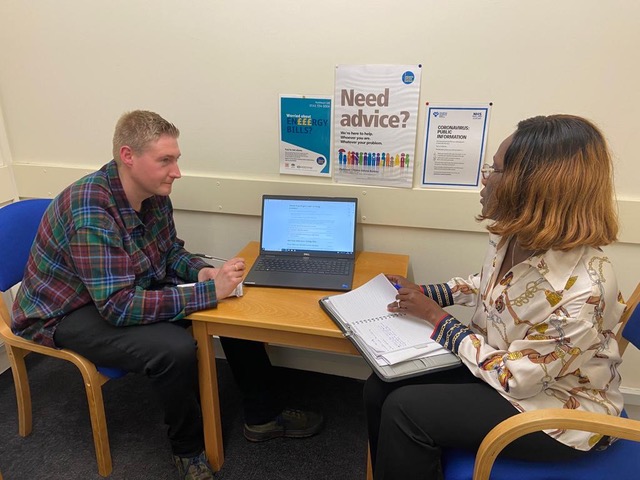
Your local CAB: what to expect, how to get help and why the service is a lifeline for many
If you had a problem how would you go about contacting a bureau? The fastest way is via the Citizens Advice Scotland website (https://www.cas.org.uk/) click on ‘get advice’, insert your home postcode and your local bureau will be located. It’s then a simple step to look up the bureau’s own website where there will be information about how to book a face to face appointment or email or telephone for information. Some bureaux organise drop-in sessions where you don’t need an appointment but demand is high so be prepared to queue! If you have a simple question you may find the online advice on the CAS website useful.
Having made contact with a CAB – what kind of service might you expect? CABx are very user friendly. Impartiality is a key principle. We don’t judge – we help. As one client said:
“I feel so much calmer after speaking with you, you have no idea the difference your help makes. I have not been able to sleep for the last two weeks, I just feel lighter. I can’t thank you enough”.
In a face to face appointment or over the telephone, the adviser will ask for some personal details and listen carefully to the client. Having understood the issues, the adviser will then check the law in the CAB information system to ensure that the client receives the correct information. For those with complex issues one interview is often insufficient. As the case below illustrates several appointments and catch up telephone calls might be needed to make good our commitment to a holistic service.

Musa* and Aisha* have three children and have been granted refugee status allowing them leave to remain and to work. They were living in temporary accommodation and had been advised by the owner company that they must leave and that they would receive an eviction notice. They contacted the Council ‘Homeless Team’ and applied to housing associations but with no result. Working with a local law centre, the bureau was able to offer legal support in the event of an eviction but also assisted with applications for Universal Credit, Child Benefit and Scottish Child Payment and Adult Disability Payment for Aisha who has health problems. The bureau also assisted with an application to the Council to allow the children to attend the same school. Eviction was avoided and the family supported to begin living again.
Last year (2024-25) nationally our 58 CABx helped 196,540 people with over 702,568 different pieces of advice. When clients receive payments of unclaimed or appealed benefits or have their debts written off we call it ‘client financial gains’. Last year these gains amounted to £169.4 million; money that for the major part goes to vulnerable people who spend it in their nearby shops thereby boosting the local economy.
What people don’t know about CABx is that many of our staff are volunteers working as advisers, social policy workers or trustees. We provide excellent training that very often helps people find employment. If you are interested in volunteering, please contact your local bureaux, they will be delighted to hear from you. And why do people volunteer? As one adviser said: “I never expected to gain such important skills and experience”. For others a willingness to help the local community and positive feedback are important motivators as the following comments illustrate: “You have all been absolutely brilliant- wouldn’t be where I am now without all your help” and “CAB has saved me from being very unwell and harming myself.“
*All names used in the article are fictitious in order to preserve confidentiality.
Gil Long is Chair of Parkhead CAB
Find out more about CABx here: https://www.cas.org.uk/